

Every construction bid starts with a hard and fast set of numbers, and those numbers determine whether a project turns a profit or quietly bleeds cash. Contractors often lose bids not because their pricing is wrong, but because their portions are. A neglected beam count, an underestimated concrete pour, or a miscalculated square footage can throw off an entire project before the first shovel touches the ground. When quantity analysis is dealt with as an afterthought instead of the inspiration it has to be, bidding becomes a guessing sport dressed up as strategy. This article shows how sharpening that one technique can alter the final results of nearly every task you chase.
Why Precise Quantities Change the Way You Bid
Quantity analysis is the quiet spine of each aggressive bid. It determines how much cloth you order, how many hard work hours you allocate, and ultimately what percentage lands at the lowest of the total. Many corporations operating with experienced construction cost estimators Texas have observed that even a 5 percent error in takeoff quantities can swing a bid from profitable to break-even, or worse.
The Hidden Cost of Guesswork
Eyeballing portions feels faster in the moment, but it rarely holds up as soon as the task is underway. Contractors who pass certain sizes regularly discover shortfalls mid-build, while correcting them costs a lot more than getting it right the first time.
How Small Errors Snowball Into Big Losses
A single miscount on rebar or drywall sheets rarely stays small. It ripples into labor scheduling, delivery timing, and alternate orders that clients resent signing. What starts as a rounding blunder on paper can end up a 5-figure headache on site.
Turning Numbers Into a Competitive Edge
Firms that treat quantity takeoffs as a strategic device, as opposed to a formality, tend to publish tighter, more confident bids. They realize precisely where their margin lives; this means that they can compete on rate without gambling on earnings.
Making Estimates a Shared Language Between Teams
Bidding accuracy improves dramatically while estimators, challenge managers, and field crews are painting from the same set of numbers in place of separate assumptions. A shared, demonstrated quantity listing eliminates the back-and-forth guessing that regularly takes place between the office and the jobsite, giving all of us a single source of truth to build the idea around.
Aligning the Office With the Field
Disconnects between what is priced within the workplace and what’s built on the web page are one of the maximum commonplace assets of price range float. When quantities are documented honestly and shared early, area crews can flag troubles before materials are ordered rather than after.

Why a Single Source of Truth Matters
This is where based support on subjects. Many mid-sized firms rely on Blueprint Estimating Services to translate architectural drawings into particular, line-by-line quantities before a bid is ever assembled. That extra layer of evaluation catches discrepancies early, long before they turn into steeply priced surprises in the course of production.
Reducing Costly Back-and-Forth
A demonstrated amount listing additionally cuts down on the countless email chains and calls that show up when a subcontractor’s numbers don’t match the overall contractor’s. Fewer clarifications imply quicker bid turnaround and fewer chances for something to fall through the cracks.
Where Digital Tools Are Reshaping Quantity Analysis
Paper blueprints and hand markups nonetheless have their place, but they slow down an already time-compressed bidding procedure. Digitizing drawings permits estimators to measure, layer, and pass-test portions with a long way more precision than a printed sheet ever allowed.
Moving Beyond Paper Markups
Manual markups are easy to misread, tough to update, and nearly not possible to audit once a bid has changed hands. Digital documents resolve that by using a unified, traceable model that all and sundry work from.
From Scanned Drawings to Usable Data
That shift commonly starts with converting scanned or PDF drawings into usable digital formats. Firms that rely upon PDF to CAD Conversion services regularly find that smooth, editable drawings make quantity takeoffs quicker and quite accurate, considering the fact that every wall, duct, and fixture can be measured directly in place of expected via eye.
Faster Takeoffs Without Sacrificing Accuracy
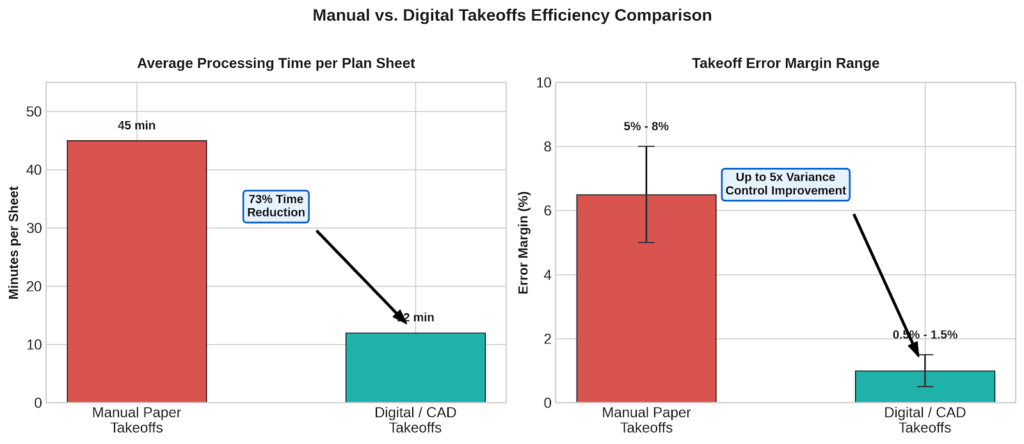
Once drawings are in an editable format, estimators can layer, degree, and alter portions in mins in preference to hours. The time saved does not come at the price of precision; if anything, it gives estimators room to double-check their numbers before the bid goes out.
| Evaluation Metric | Manual Paper Takeoffs | Digital / CAD Takeoffs | Efficiency / Accuracy Improvement |
| Avg. Time per Plan Sheet | 45 minutes | 12 minutes | 73% Time Reduction |
| Takeoff Error Margin | ± 5% to 8% | ± 0.5% to 1.5% | up to 5x Variance Control |
| Revision Update Speed | Re-measure entire sheet | Instant layer re-calculation | 85% Faster Re-bidding |
| Auditability & Traceability | Low (handwritten notes) | High (digital revision log) | Full Line-Item Verification |
Common Mistakes That Quietly Sink Bidding Accuracy
Even experienced teams fall into habits that chip away at accuracy without every person noticing until the bid is already lost. These errors are not often experienced as serious in the moment; that’s precisely why they may be so easy to repeat bid after bid:
- Relying on old or unverified drawings instead of the latest revision
- Rounding portions “for protection” without documenting why or by how much
- Skipping a second evaluation before the bid goes out the door
None of those are dramatic screw-ups on their own, but stacked collectively across a handful of bids, they quietly erode both win charges and profit margins. The restoration is not greater effort; it is greater consistency in how portions are checked and signed off before submission.
Practical Steps to Strengthen Your Bidding Process
None of this calls for an overhaul of how your group works. Small procedure adjustments generally tend to compound into real accuracy gains over a handful of bids:
- Build a standardized takeoff checklist each estimator follows
- Cross-reference cloth counts against at least impartial assets
- Revisit past bids to see where actual prices diverged from estimates
Taken collectively, these behaviors turn amount analysis from a one-time assignment into an ongoing feedback loop. Each completed undertaking turns into a data point that sharpens the next bid; that’s exactly how continuously correct estimators construct a reputation clients accept as true.

Final Thoughts
Winning more bids isn’t commonly about reducing margins thinner or operating longer hours on a proposal. It’s approximately trusting the numbers at the back of it. When quantity analysis is accurate, regular, and double-checked, every other part of the bidding system gets less complicated, with pricing, scheduling, and customer conversations protected. The contractors who deal with takeoffs as a subject as opposed to a chore are the ones who hold winning work without losing sleep over it.
FAQs
1. What is quantity evaluation in construction bidding?
It’s the system of measuring and calculating the exact amount of materials, hard work, and systems a project requires, forming the basis for a correct bid.
2. Why do misguided quantity takeoffs harm profitability?
Underestimating quantities results in value overruns and change orders, whilst overestimating can make a bid uncompetitive, both of which chip away at income margins.
3. How often should quantity takeoffs be reviewed before submitting a bid?
At least twice: once at some stage in the preliminary takeoff and again as a final check before submission, ideally by using a second reviewer.
4. Does digitizing drawings actually improve accuracy?
Yes. Digital, editable drawings permit estimators to take off without delay and continuously, decreasing human mistakes that include manual, paper-based takeoffs.
5. Can small construction firms benefit from outside estimating support?
Absolutely. Outside help can add capacity during busy bidding seasons and bring a second, unbiased set of eyes to catch mistakes earlier, before they grow to be costly.
READ ALSO: Best Clothing Manufacturers in Los Angeles