
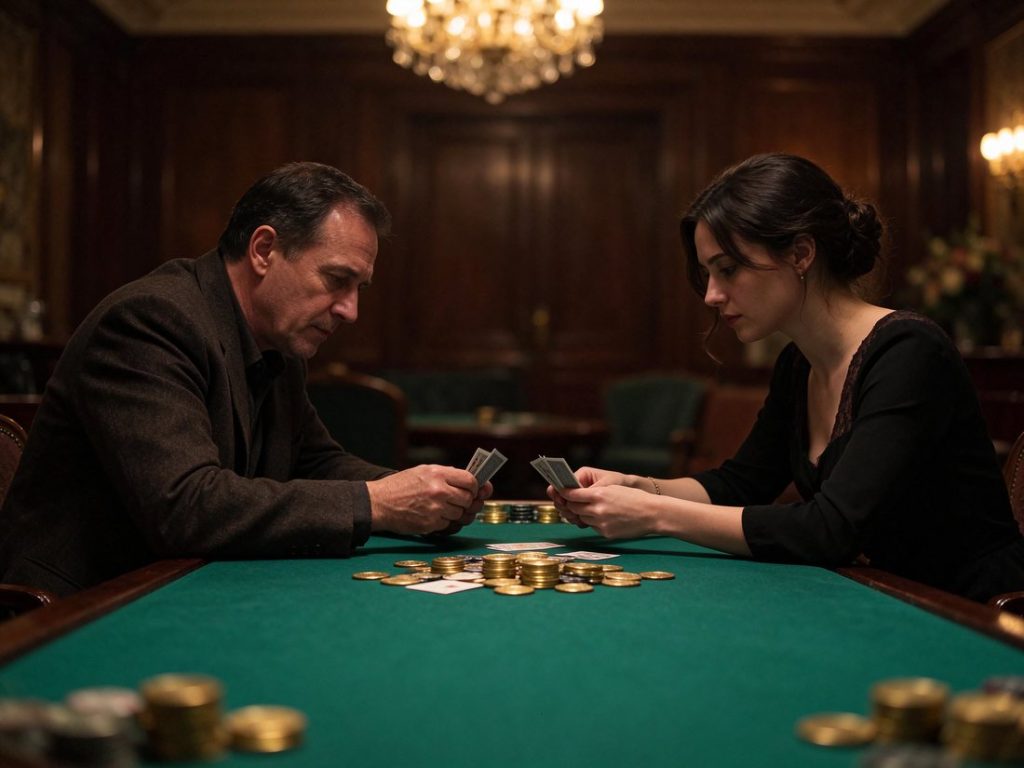
A side show lets two players compare hands privately instead of playing the pot to a full show. In most Teen Patti implementations, one player challenges, pays a show charge that equals twice the current stake, and the player holding the weaker hand must pack immediately and forfeit their chips. It is a way to end a two-handed standoff without paying a full show, not a shortcut to winning pots. The charge, the eligibility conditions and the way the pot is settled differ between rooms, so confirm the table rules before you use it. This guide explains the mechanics, prices the decision, and shows where a side show saves chips and where it costs you the pot.
What a Side Show Actually Does
The core hand order in Teen Patti is unchanged by a side show. You are still comparing Trail, Pure Sequence, Sequence, Colour, Pair and High Card in that order; the only difference is that the comparison happens in private between two players rather than in front of the table. On the teen patti ranking page, the six categories and the tie-break rules are laid out in full, and those are exactly the rules a side show applies.
Who Can Call It, and When
Eligibility is the part players get wrong most often. Common conventions in Teen Patti rooms include the following, and a given lobby may apply any or all of them: only two players remain active in the hand; the caller must be seated before the player they challenge, or the reverse, depending on the app; the caller may be required to be seen rather than blind; and many tables allow only one side show in a hand.
Because these conditions are set by the room rather than by the game, the practical rule for a new player is simple: read the lobby rules once, write down which condition applies, and stop guessing afterwards. If a challenge button is greyed out, the reason is usually one of the eligibility conditions above rather than a bug.
How the required anchor appears in play. Players who learn the flow on a single teen patti master build often assume every table behaves the same way, then lose chips on the first side show they call in a different room. The mechanics are portable; the house rules are not.
Pricing the Decision
A side show is a decision with a computable cost, so treat it like a bet rather than an instinct. The table below compares the four ways a two-player hand can end, using a stake of 100 chips as the reference so the arithmetic is easy to check.
| Ending | What you pay | What you get | Best when |
| Fold | Nothing further; you lose chips already in the pot | No pot | Your hand is clearly beaten |
| Call to a full show | Current stake each round until the show | Whole pot if your hand is higher | You expect to be called and win |
| Side show | Twice the current stake, once | Whole pot if your hand is higher; nothing if lower | You are confident and want to end the hand now |
| Blind raise, opponent packs | Your raise only | Whole pot without a comparison | Opponent has been folding to pressure |
When a Side Show Saves Chips
A medium hand against an aggressive caller
You hold a Pair of Nines with a Queen kicker, the pot is 500, and your opponent has raised three times in a row on a board you cannot read. Calling again commits 150 with more rounds likely, and folding gives up a pot you may still win. A side show at 300 ends the ambiguity in one action. If you are ahead, you take 500; if you are behind, you lose 300 rather than 150 plus another 150 plus another. The move is correct not because your hand is strong but because the alternative line is more expensive.
You have been playing blind, your opponent is seen, and the stake is still small. A side show here costs little and converts your cheap blind information advantage into a certain result. This is the one situation where the charge is genuinely small relative to the pot, and it prevents a seen opponent from extracting several more rounds of value from a hand you cannot evaluate.
Three Situations Where It Costs You the Pot
First, challenging with a marginal hand against a player who has shown strength. You are paying to confirm what the betting already told you. Second, challenging when your opponent is likely to fold to pressure: a raise wins the pot with no comparison at all, and a side show hands them a free look at your holdings when they would otherwise have packed. Third, challenging a player who has already called a side show in the same session with a weak hand, because their range at that moment is tighter than their ordinary calling range.
The general rule that survives all three cases: a side show is a substitute for calling, never a substitute for raising. If you would rather have the opponent fold than see their cards, do not call a side show.
A Worked Two-Player Hand
Blinds are 20 per player, four players are seated, and two fold after the boot, leaving you and one opponent with 260 in the pot. You hold K of spades, Q of spades and J of spades, a Pure Sequence. Your opponent bets the current stake of 40, then raises to 80. You call, taking the pot to 420. They raise again to 160 and the pot reaches 580.
At this point your hand is strong but not the top of the order: any Trail and any higher Pure Sequence beat you, and both are rare. A side show at twice the 160 stake costs 320 into a 580 pot. You need roughly 36 percent equity for the charge to be worth paying, and a Pure Sequence against a player who has raised twice on a two-handed table clears that bar comfortably. You challenge, they show a Pair of Kings, you take 580 for a net gain of 260 after the charge and your earlier calls.
Risk and Fair Play Notes
Teen Patti is a game of chance with a skill component, and no strategy eliminates variance. Chips in social or practice rooms are usually virtual and carry no cash value; where real-money play is offered, the applicable local law decides whether you may participate, and the platform’s terms govern deposits, withdrawals and account closures. Do not treat a winning streak as evidence of a reliable edge, do not chase losses with larger stakes, and do not use a side show to settle arguments outside the table: private card comparisons between players outside the app are not part of the game and can be a route to collusion.
The Takeaway
A side show is a priced shortcut: twice the stake to end a hand immediately, with the weaker hand packing. Use it when calling again would cost more than the charge, when you hold a medium hand against an aggressive opponent, and when a blind player faces a seen player at a small stake. Avoid it when a raise would win the pot outright and when the betting has already told you that you are behind. Learn the room’s eligibility rules once, check the lobby rules before your first challenge, and the decision becomes arithmetic rather than guesswork.