
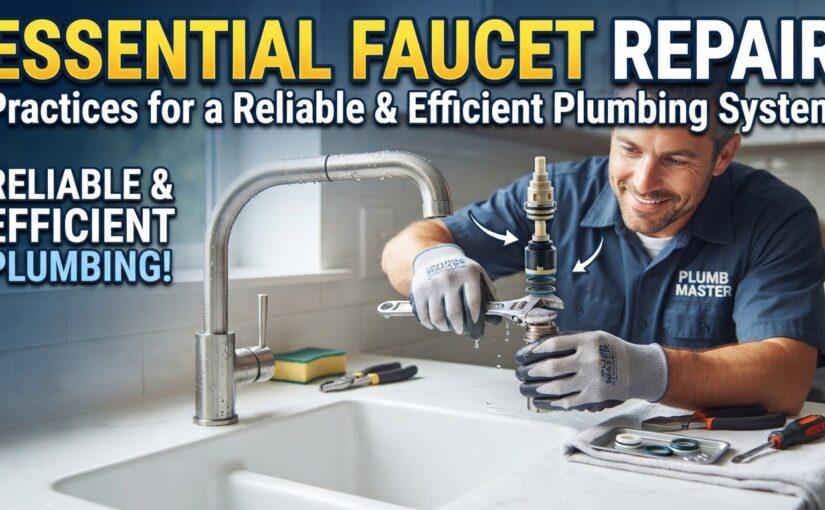
A faucet is one of the most frequently used plumbing fixtures in a home or commercial property, which means even a small problem can quickly become inconvenient. Dripping water, weak flow, unusual noises, loose handles, leaking connections, and difficulty turning the faucet on or off are all signs that something may need attention.
While some faucet problems appear minor, ignoring them for too long can result in wasted water, damaged fixtures, stained surfaces, or more extensive plumbing issues. Professional faucet repair can help identify the underlying cause of a problem and restore the fixture to proper working condition.
A careful repair approach begins with identifying the type of faucet, inspecting its components, and determining whether a worn part can be replaced or whether the entire fixture needs to be upgraded. Understanding common faucet problems and appropriate repair practices can help property owners make better decisions and avoid unnecessary expenses.
Understanding Common Faucet Problems
Faucets can develop a variety of problems as their internal components experience normal wear and tear. One of the most common issues is a persistent drip that continues even when the handle is completely closed. This may indicate a worn washer, cartridge, valve seat, O-ring, or another internal component. A faucet can also develop leaks around its base or handles, which may be caused by damaged seals or loose connections. Reduced water pressure may result from mineral buildup in the aerator, partially blocked supply lines, or issues elsewhere in the plumbing system. During faucet repair, technicians inspect the fixture carefully instead of replacing random components without identifying the actual cause. Proper diagnosis can save time and money because the correct part can be repaired or replaced without disturbing components that are still functioning properly. Addressing problems early can also prevent minor defects from developing into more complicated plumbing concerns.
Why a Dripping Faucet Should Not Be Ignored
A dripping faucet may seem like nothing more than an annoying sound, but continuous dripping can waste a surprising amount of water over time. The constant moisture can also leave mineral deposits on sinks, countertops, and surrounding fixtures, potentially causing staining or surface deterioration. In some cases, a persistent drip indicates that an internal component is no longer creating a proper seal. Delaying faucet repair may allow the damaged component to deteriorate further, making the eventual repair more complicated. A technician can determine whether the issue is caused by a washer, cartridge, valve, seal, or another component and then recommend the most suitable solution. Repairing a dripping faucet promptly can help conserve water and restore normal operation. It also provides an opportunity to inspect nearby connections and identify other issues before they become more expensive to correct.
Identifying the Type of Faucet
Before attempting a repair, it is important to understand which type of faucet is installed because different designs use different internal mechanisms. Common types include compression faucets, cartridge faucets, ball faucets, and ceramic-disc faucets. Each design has its own components and may require specific tools and replacement parts. During faucet repair, identifying the faucet type helps determine how it should be disassembled and which components should be inspected first. Using an incorrect replacement part or applying the wrong repair method can create additional problems and may damage the fixture. Manufacturers may also produce different versions of similar-looking faucets, so visual similarity does not always mean that the internal parts are interchangeable. Proper identification makes the repair process more efficient and helps ensure that replacement components are compatible with the existing fixture.
Inspecting Washers and Seals
Washers, O-rings, and seals play a critical role in preventing water from escaping around moving components and connections. Because these parts are exposed to repeated movement and water pressure, they can eventually become compressed, cracked, hardened, or otherwise damaged. A worn seal may cause water to leak around the handle, spout, or base of the faucet. During faucet repair, technicians can inspect these small components for visible signs of deterioration and replace them when necessary. Even though washers and O-rings are inexpensive compared with an entire faucet, installing the wrong size can prevent the fixture from sealing properly. The replacement part should fit correctly and be suitable for the specific faucet design. Careful inspection is particularly important because a small damaged seal can produce a continuous leak that appears to originate from another part of the fixture.
Dealing With Low Water Flow
Reduced water flow is another common faucet complaint and can make everyday activities frustrating. In many situations, the problem is caused by mineral deposits or debris accumulating inside the aerator at the end of the faucet spout. Because the aerator mixes air with the water stream, buildup can restrict the openings and make the flow appear weak or uneven. Before beginning extensive faucet repair, the aerator can be inspected and cleaned when appropriate. If the restriction is not located in the aerator, the technician may need to investigate supply lines, valves, cartridges, or other plumbing components. Low flow affecting multiple fixtures may indicate a broader plumbing issue rather than a problem with one faucet. Correct diagnosis is therefore important because replacing a faucet will not necessarily solve a problem originating elsewhere in the water supply system.
Repairing Loose Faucet Handles
Loose handles can make a faucet difficult to operate and may also indicate that internal components are becoming worn or that a retaining screw has loosened. A handle that moves excessively can make it difficult to control water temperature and flow accurately. During faucet repair, technicians can inspect the handle, fastening hardware, cartridge or valve mechanism, and surrounding components to determine why the handle has become unstable. Tightening a loose screw may resolve a simple problem, but excessive movement can sometimes indicate deeper wear inside the faucet. It is important not to overtighten hardware because excessive force can damage threads, crack certain components, or make future servicing more difficult. A careful repair maintains the proper balance between secure assembly and smooth operation. Once the handle has been repaired, it should move comfortably without unnecessary looseness or resistance.
Addressing Leaks Around the Base
Water appearing around the base of a faucet is a problem that should be investigated rather than simply wiped away. The source may be a worn O-ring, deteriorated seal, loose connection, damaged fixture body, or water escaping from the spout assembly. Repeated moisture around the base can damage surrounding surfaces and may eventually contribute to staining or deterioration. Professional faucet repair involves determining exactly where the water is coming from before replacing parts. Technicians may inspect connections, seals, mounting hardware, and internal components to identify the source. Cleaning the surrounding area before and after the repair can also make it easier to determine whether the leak has been successfully resolved. Once the repair is complete, the faucet should be operated under normal conditions while the surrounding area is monitored for additional moisture.
Handling Mineral Buildup
Mineral deposits can accumulate inside and around faucets, particularly where water contains higher concentrations of dissolved minerals. These deposits may appear as white, chalky, or discolored material around the spout, aerator, handles, and connections. Over time, buildup can interfere with water flow and make moving parts harder to operate. As part of faucet repair, appropriate cleaning may be used to remove deposits from accessible components when the faucet material and manufacturer recommendations allow it. Aggressive scraping or unsuitable chemicals can damage finishes, seals, and internal parts, so cleaning methods should be selected carefully. In some cases, severe mineral buildup may indicate that certain internal components need replacement rather than simple cleaning. Regular cleaning and maintenance can help preserve the appearance and function of the faucet while reducing the likelihood of restricted flow and difficult operation.
Knowing When Replacement Is Better
Not every damaged faucet should automatically be repaired. Older fixtures may have multiple worn components, extensive corrosion, cracked bodies, damaged threads, or discontinued replacement parts that make repair impractical. A professional assessment can help determine whether repairing the existing fixture is reasonable or whether replacement would provide better long-term value. In some situations, faucet repair can restore the fixture at relatively low cost, while in others, repeated repairs may become more expensive than installing a new, efficient model. Replacement may also be appropriate when the faucet no longer meets the property’s functional needs or when its design makes maintenance unnecessarily difficult. The decision should consider the fixture’s condition, age, repair cost, availability of parts, water efficiency, and expected remaining service life. Making this comparison can help property owners avoid spending repeatedly on a fixture that is approaching the end of its useful life.
Using the Right Tools
Proper tools can make faucet maintenance and repair considerably safer and more efficient. Depending on the fixture, technicians may use adjustable wrenches, basin wrenches, screwdrivers, hex keys, pliers, cartridge pullers, seal removal tools, and other specialized equipment. Using the wrong tool can damage fasteners or decorative surfaces, while excessive force can crack or distort components. Professional faucet repair relies on appropriate tools and techniques to remove components without causing unnecessary damage. Before working on the fixture, the water supply should be properly shut off to prevent uncontrolled water flow. Placing a protective covering over the sink can also prevent small parts from falling into the drain and can help protect the surface from scratches. A careful preparation process makes the repair safer and reduces the possibility of creating additional problems.
Testing After the Repair
Completing the physical repair is not the final step because the faucet should be tested to confirm that the problem has actually been resolved. After the repair, the water supply can be restored carefully while connections and operating components are observed for signs of leakage. The faucet should be opened and closed several times, and both hot and cold functions should be checked where applicable. Proper faucet repair should result in smooth operation, stable water flow, and secure connections without visible leaks. If water continues to appear around the fixture, the technician may need to inspect the installation again to determine whether another component is responsible. Testing under normal operating conditions is especially important because some leaks may not become apparent until the faucet has been pressurized. Thorough testing provides greater confidence that the fixture is ready for regular use.
Preventing Future Faucet Problems
Routine maintenance can help reduce the frequency of faucet problems and extend the useful life of plumbing fixtures. Property owners can periodically inspect faucets for drips, loose handles, unusual noises, corrosion, mineral buildup, and changes in water flow. Cleaning aerators and accessible surfaces can help prevent deposits from interfering with performance. It is also helpful to avoid using excessive force when turning handles because aggressive operation can place unnecessary stress on internal components. Professional faucet repair may be needed when routine maintenance is no longer enough, but early attention can often prevent a small problem from becoming a larger one. Addressing leaks promptly is particularly important because continuous moisture can affect surrounding surfaces. Keeping faucets clean, operating them properly, and responding quickly to changes in performance can contribute to more dependable plumbing fixtures.
Benefits of Professional Faucet Services
Professional plumbing assistance can be particularly valuable when a faucet problem involves hidden leaks, difficult-to-remove components, corrosion, unusual pressure issues, or connections that are not easily accessible. Experienced technicians can diagnose the problem systematically rather than relying on trial and error. They can also determine whether a repair is practical and identify compatible replacement components when necessary. Professional faucet repair can help restore proper operation while reducing the likelihood of accidental damage to the fixture or surrounding plumbing. Technicians may also identify related issues that property owners have not noticed, such as deteriorating supply connections or moisture around nearby plumbing. Although simple maintenance may sometimes be manageable without professional assistance, complicated problems are best handled by someone with the appropriate tools and experience. This approach can save time and help protect the plumbing system from unnecessary damage.
Final Thoughts
A properly functioning faucet provides convenience, efficient water use, and dependable performance, while a damaged fixture can create ongoing frustration and unnecessary water waste. Common problems such as dripping, low flow, loose handles, mineral buildup, and leaks around the base should be addressed rather than ignored. Careful diagnosis is essential because different faucet designs use different internal components and require different repair techniques. Professional faucet repair can restore worn fixtures, resolve common leaks, improve water flow, and help determine when replacement is more practical than continued maintenance. Regular inspections and prompt attention to minor problems can also help prevent more extensive damage. By using suitable tools, compatible replacement parts, proper repair methods, and thorough testing, property owners can maintain faucets that operate efficiently and reliably. A proactive approach to faucet care ultimately helps protect both the plumbing fixture and the surrounding property while reducing unnecessary repair expenses and water consumption.