Maya Angelou spent six decades turning hard-won experience into language that people return to again and again — in graduation speeches, sympathy cards, protest signs, and quiet moments alone. But her popularity has a side effect: she’s one of the most misquoted writers in American history. Lines by other authors circulate under her name, real quotes get trimmed until they lose their meaning, and near-identical paraphrases get passed off as exact wording.
This guide collects her most meaningful quotes with their original sources wherever they can be verified, explains what each one actually means, and — just as importantly — flags the popular “Angelou quotes” she never wrote. The goal isn’t just inspiration. It’s inspiration you can trust.
Quick Answer
Maya Angelou (1928–2014) was an American poet, memoirist, and civil rights activist best known for her 1969 autobiography I Know Why the Caged Bird Sings and her 1978 poem “Still I Rise.” Her quotes remain influential because they translate hard personal experience — childhood trauma, racism, poverty — into plain, quotable wisdom about resilience, self-respect, and kindness that still reads as immediate rather than dated.
Quick Facts
| Birth name | Marguerite Annie Johnson |
| Born | April 4, 1928, St. Louis, Missouri |
| Died | May 28, 2014, Winston-Salem, North Carolina (age 86) |
| Known for | I Know Why the Caged Bird Sings, And Still I Rise, “On the Pulse of Morning” |
| Roles | Poet, memoirist, civil rights activist, professor, performer |
| Key honors | Presidential Medal of Freedom (2011), National Medal of Arts (2000), three Grammy Awards for spoken word recordings |
| Notable moment | Read her poem “On the Pulse of Morning” at Bill Clinton’s 1993 inauguration, becoming only the second poet — after Robert Frost — to read at a U.S. presidential inauguration |
Table of Contents
- Who Was Maya Angelou?
- Maya Angelou Quotes at a Glance
- Quotes About Life and Perspective
- Quotes About Courage and Resilience
- Quotes About Kindness and Love
- Quotes About Women, Identity, and Self-Respect
- Quotes About Education and Growth
- Frequently Misattributed Quotes
- Recommended Books
- FAQs
Who Was Maya Angelou?
Born Marguerite Annie Johnson, Angelou spent much of her childhood in Stamps, Arkansas, raised by her grandmother after her parents’ marriage ended. At age seven, she was sexually assaulted by her mother’s boyfriend; when the man was killed shortly after his conviction, the young Angelou believed her testimony had caused his death and stopped speaking almost entirely for roughly five years. That silence, and the reading that filled it, shaped the writer she became.
She built an extraordinarily varied career before she became famous as an author — professional dancer, singer, actress, and San Francisco’s first Black female cable car conductor — and worked alongside Martin Luther King Jr. and Malcolm X during the civil rights movement. In 1969, encouraged by James Baldwin, she published I Know Why the Caged Bird Sings, the first of seven autobiographies. It was nominated for the National Book Award and remains one of the most widely taught — and most frequently banned — memoirs in American schools.
Angelou went on to publish poetry, essays, plays, and screenplays, won three Grammy Awards for her spoken-word recordings, and later taught as the Reynolds Professor of American Studies at Wake Forest University. In 1993 she read her poem “On the Pulse of Morning” at Bill Clinton’s first inauguration; in 2011, Barack Obama awarded her the Presidential Medal of Freedom, the nation’s highest civilian honor. She died in 2014 at her home in Winston-Salem, North Carolina.
What keeps her words in circulation isn’t just craftsmanship — it’s that she earned the authority behind them. When she writes about resilience or self-worth, it comes from someone who was rebuilding both from very little.
Related: Famous Quotes and Quotations: The Definitive, Fact-Checked Collection
Maya Angelou Quotes at a Glance
A shareable shortlist of her most quoted lines. Full context for each appears in the themed sections below.
“Try to be a rainbow in someone’s cloud.” — Letter to My Daughter (2008)
“You may not control all the events that happen to you, but you can decide not to be reduced by them.” — Letter to My Daughter (2008)
“When someone shows you who they are, believe them the first time.” — Widely quoted from Angelou’s interviews and public talks
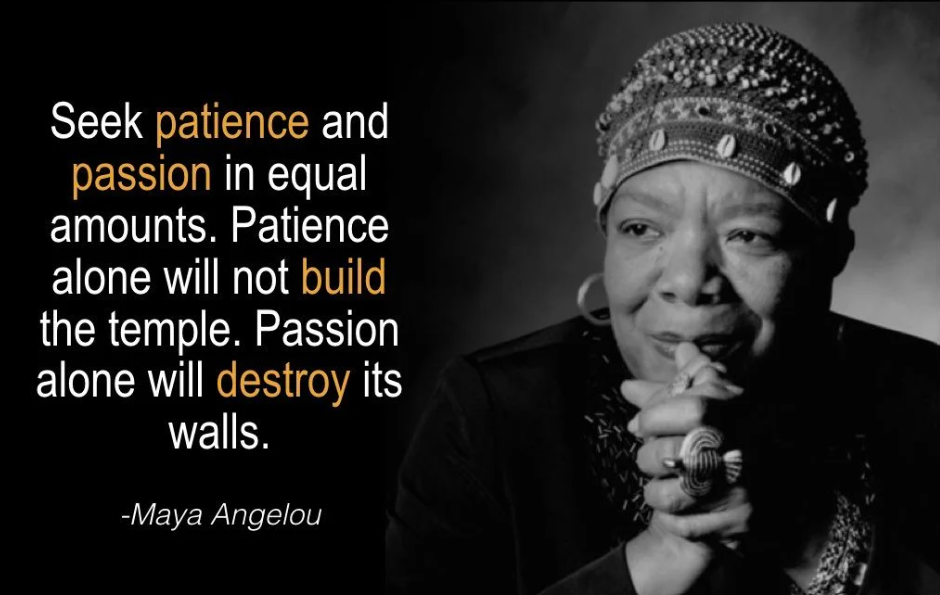
“We may encounter many defeats, but we must not be defeated.” — Widely quoted from Angelou’s interviews and public talks
“Courage is the most important of all the virtues, because without courage, you can’t practice any other virtue consistently.” — Widely quoted from Angelou’s interviews and public talks
“It’s one of the greatest gifts you can give yourself, to forgive. Forgive everybody.” — Widely quoted from Angelou’s interviews and public talks
“If you don’t like something, change it. If you can’t change it, change your attitude.” — Widely quoted from Angelou’s interviews and public talks
“I’ve learned that making a ‘living’ is not the same thing as ‘making a life.'” — Widely quoted from Angelou’s interviews and public talks
A note on sourcing: several of Angelou’s most-repeated lines come from decades of interviews, commencement talks, and television appearances rather than a single published book. Where a specific book is confirmed, we’ve cited it. Where it isn’t, we’ve said so honestly rather than inventing a source.
Quotes About Life and Perspective
“A friend may be waiting behind a stranger’s face.” Letter to My Daughter (2008) A reminder that Angelou returned to often: the people who end up mattering most rarely announce themselves in advance.
“We delight in the beauty of the butterfly, but rarely admit the changes it has gone through to achieve that beauty.” Widely quoted from her interviews and talks A favorite line for anyone in the middle of a hard transition — it reframes struggle as the price of transformation rather than a sign something has gone wrong.
“Some people cannot see a good thing when it is right here, right now. Others can sense a good thing coming when it is days, months, or miles away.” Widely quoted from her interviews and talks Less about optimism than about attention — Angelou is drawing a line between people who notice what’s in front of them and those who don’t.
“Listen to yourself and in that quietude you might hear the voice of God.” Widely quoted from her interviews and talks A rare Angelou quote that points inward rather than outward, suggesting that wisdom is something you already carry, not something you have to go find.
“Let’s tell the truth to people. When people ask, ‘How are you?’ have the nerve sometimes to answer truthfully.” Letter to My Daughter (2008) Angelou was suspicious of small talk that keeps people at a distance from each other; this line is a direct challenge to it.
Quotes About Courage and Resilience
“You may not control all the events that happen to you, but you can decide not to be reduced by them.” Letter to My Daughter (2008) This is Angelou’s actual wording — a shorter, punchier paraphrase (“I can be changed by what happens to me, but I refuse to be reduced by it”) circulates widely online and is often mistaken for the original.
“We may encounter many defeats, but we must not be defeated.” Widely quoted from her interviews and talks A distinction Angelou returned to throughout her life: losing a round isn’t the same as losing the fight.
“Courage is the most important of all the virtues, because without courage, you can’t practice any other virtue consistently.” Widely quoted from her interviews and talks Angelou argued that kindness, honesty, and generosity are all easy to manage occasionally — courage is what makes it possible to practice them consistently, especially when it costs something.
“Develop enough courage so that you can stand up for yourself and then stand up for somebody else.” Widely quoted from her interviews and talks A two-step version of the same idea: self-respect first, so that solidarity with others has something to stand on.
“Try to live your life in a way that you will not regret years of useless virtue and inertia and timidity. Take up the battle, take it up! It’s yours, this is your life, this is your world.” Widely quoted from her interviews and talks One of her more forceful lines, aimed squarely at hesitation rather than failure.
Quotes About Kindness and Love
“Try to be a rainbow in someone’s cloud.” Letter to My Daughter (2008) Arguably Angelou’s most quoted single line — a compact argument that small, unasked-for kindness matters more than grand gestures.
“It’s one of the greatest gifts you can give yourself, to forgive. Forgive everybody.” Widely quoted from her interviews and talks Notice the framing: Angelou presents forgiveness as self-interest, not sainthood — something you do for your own sake first.
“My wish for you is that you continue. Continue to be who and how you are, to astonish a mean world with your acts of kindness.” Widely quoted from her interviews and public remarks A quote frequently used in graduation speeches and cards, built around the idea that kindness is most powerful when it’s unexpected.
“Love life. Engage in it. Give it all you’ve got. Love it with a passion because life truly does give back, many times over, what you put into it.” Widely quoted from her interviews and talks Less a claim about fairness than a claim about proportion — effort compounds.
“The desire to reach for the stars is ambitious. The desire to reach hearts is wise.” Widely quoted from her interviews and talks A compact contrast Angelou liked to draw between achievement and connection.
Her poem “Phenomenal Woman,” collected in And Still I Rise (1978), is one of the most celebrated love-of-self poems in American literature — a defiant, joyful catalog of confidence that doesn’t depend on conventional beauty standards. Because it’s a copyrighted poem, we won’t reproduce its lines here, but it’s essential reading alongside this list.
Quotes About Women, Identity, and Self-Respect
“If you’re always trying to be normal, you will never know how amazing you can be.” Widely quoted from her interviews and talks Angelou spent her career resisting exactly the kind of conformity this line pushes back on.
“If I am not good to myself, how can I expect anyone else to be good to me?” Widely quoted from her interviews and talks A quote often shared in the context of boundaries and self-care, though its logic is older than that framing: Angelou treats self-respect as a precondition for how others treat you, not a reward for it.
Angelou’s advocacy for women ran through both her poetry and her activism — she worked with the Southern Christian Leadership Conference during the civil rights movement and later became a widely quoted voice on Black womanhood specifically. Her poem “Still I Rise,” from And Still I Rise (1978), is frequently cited as her defining statement on resilience in the face of racism and diminishment. Because it’s a poem, we’ve described it here rather than quoting it — but it rewards reading in full.
Quotes About Education and Growth
“Any book that helps a child to form a habit of reading, to make reading one of his deep and continuing needs, is good for him.” Widely quoted from her interviews and talks Angelou, who taught herself to read voraciously during the years she didn’t speak aloud, treated reading itself — not any particular book — as the real education.
Her own path reflects that belief: without a university degree, she went on to receive more than fifty honorary doctorates and to teach for decades as the Reynolds Professor of American Studies at Wake Forest University.
You’ll Love This Post Too: Mitch Hedberg Quotes: The Definitive Guide to His Funniest, Most Iconic One-Liners
Frequently Misattributed Quotes
Angelou’s fame means her name gets attached to lines she never wrote — sometimes by mistake, sometimes because a real quote gets simplified until it no longer matches the original. Here are the most common cases, verified against their actual origins.
“A bird doesn’t sing because it has an answer, it sings because it has a song.” Not Angelou. This line was written by children’s book author Joan Walsh Anglund in her 1967 poetry collection A Cup of Sun. Angelou quoted it approvingly in interviews, which is likely why it got attached to her name — so thoroughly that in 2015 the U.S. Postal Service printed it on a commemorative Maya Angelou stamp, and President Obama once credited it to her at a White House ceremony. The Postal Service confirmed the error after the fact but kept the stamp in circulation.
“People will forget what you said, people will forget what you did, but people will never forget how you made them feel.” Not Angelou, despite being one of the internet’s most common “Angelou quotes.” The line traces back to Carl W. Buehner, an official with The Church of Jesus Christ of Latter-day Saints, quoted in Richard Evans’ Quote Book (1971) — years before Angelou is documented using a similar phrase.
“There is no greater agony than bearing an untold story inside you.” Often credited to I Know Why the Caged Bird Sings, but the line actually belongs to Zora Neale Hurston, from her 1942 memoir Dust Tracks on a Road. It’s a case of two major Black women writers of the 20th century getting conflated by quote culture.
“Do the best you can until you know better. Then when you know better, do better.” This one is genuinely uncertain. It appears attributed to Angelou in numerous bestselling books, and Angelou’s admirers have long associated the sentiment with her worldview, but no verified original source — a specific book, speech, or interview — has been documented. Treat it as popular but unconfirmed rather than definitively hers or definitively someone else’s.
Recommended Books
If these quotes resonate, here’s where they come from in fuller context:
- I Know Why the Caged Bird Sings (1969) — Angelou’s first and most famous memoir, covering her childhood in Arkansas and the trauma and silence that shaped her.
- And Still I Rise (1978) — The poetry collection containing “Still I Rise” and “Phenomenal Woman,” her two most widely referenced poems.
- Wouldn’t Take Nothing for My Journey Now (1993) — A collection of short, reflective essays on everyday wisdom, closer in tone to many of her most-quoted lines than her memoirs are.
- Letter to My Daughter (2008) — Written for the daughter Angelou never had, this collection of essays and poems is the confirmed source of several of her most popular quotes, including “Try to be a rainbow in someone’s cloud.”
- Mom & Me & Mom (2013) — Angelou’s final autobiography, focused on her complicated relationship with her mother.
- Rainbow in the Cloud: The Wisdom and Spirit of Maya Angelou — A posthumous collection of passages drawn from across her body of work, assembled with contributions from her son, Guy Johnson.
FAQs
What is Maya Angelou’s most famous quote?
No single quote is universally agreed on as “the” most famous, but “Try to be a rainbow in someone’s cloud” (from Letter to My Daughter) and the opening lines of her poem “Still I Rise” are the two most frequently cited.
What book do most Maya Angelou quotes come from?
Her seven autobiographies, her poetry collection And Still I Rise, and Letter to My Daughter are the most commonly cited sources — though many popular quotes come from interviews and public talks rather than a published book.
Did Maya Angelou really say “Do the best you can until you know better, then do better”?
It’s uncertain. The line is widely attributed to her in books and online, but no verified original source has been confirmed, so it should be treated as unconfirmed rather than definitively authentic.
Is “People will never forget how you made them feel” a real Maya Angelou quote?
No. It’s one of the most common misattributions to her; the line traces back to Carl W. Buehner, quoted in a 1971 book that predates Angelou’s use of similar phrasing.
What poems is Maya Angelou best known for?
“Still I Rise” and “Phenomenal Woman,” both from her 1978 collection And Still I Rise, along with “On the Pulse of Morning,” which she read at Bill Clinton’s 1993 presidential inauguration.
When did Maya Angelou die?
She died on May 28, 2014, at her home in Winston-Salem, North Carolina, at age 86.
A Final Word
Angelou’s words hold up not because they’re comforting, but because they were earned — tested against a childhood assault, years of silence, poverty, and the civil rights movement, and written down anyway. That’s worth remembering the next time a version of her words shows up without a source attached: the real ones can usually stand on their own.