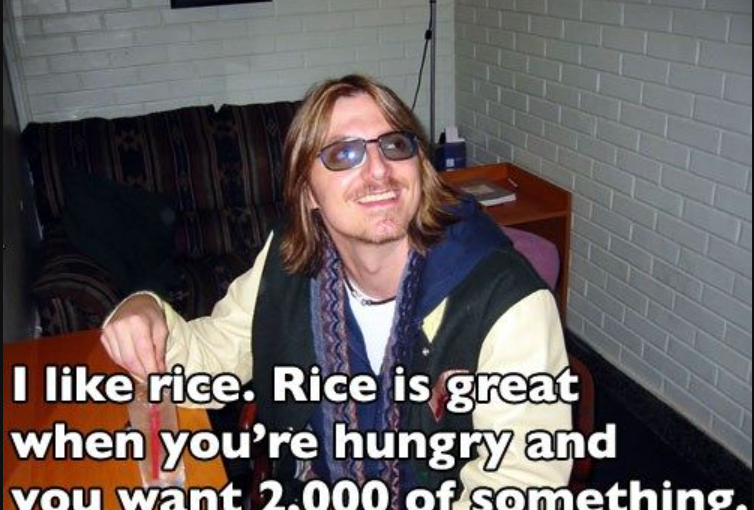
Mitch Hedberg didn’t tell jokes so much as drop them — one perfectly built sentence at a time, delivered from behind sunglasses with a half-smile, like he was as surprised by the punchline as you were. Nearly two decades after his death, his one-liners still circulate constantly online, though not always in their original form. This guide collects his most reliably sourced quotes, explains what made his style so distinct, and flags where the internet tends to get him wrong.
Who Was Mitch Hedberg? (Quick Answer)
Mitch Hedberg (1968–2005) was an American stand-up comedian known for short, surreal one-liners built on absurd logic and deadpan delivery. Dubbed “the next Seinfeld” by Time, he released two studio albums during his lifetime and became a cult favorite for jokes about food, escalators, hotels, and the strange mechanics of everyday language.
Table of Contents
Quick Facts
- Full name: Mitchell Lee Hedberg
- Born: February 24, 1968, in St. Paul, Minnesota
- Died: March 30, 2005, in Livingston, New Jersey (age 37)
- Years active: Roughly 1989–2005
- Comedy style: One-liners, non sequitur, surreal humor, deadpan delivery
- Studio/live albums: Strategic Grill Locations (1999), Mitch All Together (2003), Do You Believe in Gosh? (2008, posthumous)
- TV breakthrough: Late Show with David Letterman, first appearance in 1996, ten-plus return visits
- Also appeared on: That ’70s Show (1998), MTV’s Comikaze
- Film work: Wrote, directed, produced, and starred in Los Enchiladas! (1999); cameos in Almost Famous (2000) and Lords of Dogtown (2005)
- Spouse: Comedian Lynn Shawcroft, married 1999
Who Was Mitch Hedberg?
Hedberg grew up in St. Paul, Minnesota, the son of Swedish immigrants, and graduated from Harding High School with, by his own account, little enthusiasm for the classroom. His comedy career started almost by accident of geography: he moved to Fort Lauderdale, Florida, in the late 1980s, took a job as a cook, and began working open mics around the South Florida club circuit. A few years later he relocated to Seattle, where steady touring sharpened the style he’d become known for.
His national break came in 1996 with a first appearance on Late Show with David Letterman — a relationship that would eventually span more than ten appearances, an unusually high number for any comic. A win at the 1997 Seattle Comedy Competition and a guest role on That ’70s Show in 1998 followed. In 1999 he wrote, directed, produced, and starred in his own low-budget film, Los Enchiladas!, and released his debut album, Strategic Grill Locations. That same year he married fellow comedian Lynn Shawcroft, who would later become the steward of his archive and estate.
The 2000s brought a small-screen cameo in Almost Famous, a 2001 slot at Montreal’s Just for Laughs festival, and his second live album, Mitch All Together, in 2003. But Hedberg also struggled publicly with addiction throughout this period, including a felony heroin arrest in Austin, Texas, in 2003 that led to a six-week hospitalization. He kept touring afterward, and material about his drug use — often delivered with the same flat, unbothered cadence as his jokes about cereal or hotel elevators — became part of his act.
On March 30, 2005, Hedberg was found dead in a hotel room in Livingston, New Jersey, by his wife. He was 37. Because he had a congenital heart defect, his death was initially attributed to heart failure; a later report from the New Jersey medical examiner’s office determined the actual cause was accidental “multiple drug toxicity” involving cocaine and heroin. News of his death broke on Howard Stern’s radio show just before April Fools’ Day, and some fans initially assumed it was a hoax. A third album, Do You Believe in Gosh?, compiled from his unreleased material, was released posthumously in 2008.
Mitch Hedberg’s Comedy Style, Explained
Hedberg’s material is often filed under “one-liner” or “observational” comedy, but what set him apart was structure and delivery as much as subject matter.
Self-contained logic. Each joke was typically built as a tiny, complete unit — setup and punchline compressed into one or two sentences, engineered so it could be clipped, reordered, or repeated without losing anything. That density is part of why his lines translate so easily into captions and quote graphics today, for better or worse.
Deadpan and stage anxiety. Hedberg battled real stage fright, and it shaped his stagecraft: he frequently performed in sunglasses, sometimes with his eyes closed or fixed on the floor, muttering his lines in a low, unbothered register that made the absurdity land harder by contrast.
Absurd, airtight reasoning. Many of his best jokes follow a strange but internally consistent logic — an escalator can’t be “broken,” it can only become stairs; a burrito is functionally a sleeping bag for ground beef. The humor comes from taking a mundane object and reasoning about it just a few degrees past normal.
Non sequitur and tangents. He’d frequently follow a joke with an unrelated aside, letting one observation trail into a completely different one, which added to the sense that his mind simply worked at an odd, delightful angle.
A recognizable peer group, a singular voice. Critics often compared him to Steven Wright for the shared one-liner format, but Hedberg’s material leaned more toward the absurd and the self-deprecating, with far more references to food, travel, and his own drug use.
Related: Famous Quotes and Quotations: The Definitive, Fact-Checked Collection
Best Mitch Hedberg Quotes
A note on this list: Hedberg’s jokes are copyrighted creative works, and several “definitive” quote collections online reproduce hundreds of his lines wholesale. We’ve kept this selection deliberately short and sourced, favoring context over volume — if you want the full experience, his albums are the real destination.

Classic One-Liners
“My fake plants died because I did not pretend to water them.”
One of his most quoted lines, and a good example of his favorite trick: following a small, real-seeming premise to its logically absurd conclusion.
“An escalator can never break: it can only become stairs.”
Often cited as his single most famous joke. It’s a good demonstration of how his humor treated ordinary infrastructure as if it had its own bureaucratic personality.
“I’m an ice sculptor. Last night I made a cube.”
A three-second joke that’s really about subverting expectation — “sculptor” implies elaborate craft, and he immediately undercuts it.
Food, Drink & Everyday Objects
“A burrito is a sleeping bag for ground beef.”
“I ate one anchovy, and that is why I did not eat two anchovies.”
Reportedly from his 2003 live album, Mitch All Together, this one is a tidy piece of circular logic dressed up as a food anecdote.
Logic, Wordplay & Absurd Reasoning
“I’m against picketing, but I don’t know how to show it.”
A favorite among fans of his wordplay — the joke’s entire engine is the double meaning of “show it.”
“Wearing a turtleneck is like being strangled by a really weak guy, all day.”
On Himself and His Habits
“I used to do drugs. I still do, but I used to, too.”
His most quoted line about his own addiction — flat, funny, and, in hindsight, quietly sad.
“I have not slept for ten days, because that would be too long.”
“I wish I could play little league now. I’d be way better than before.”
Quotes That Get Misremembered or Misattributed
Because Hedberg’s jokes were performed live and evolved slightly night to night, you’ll find small wording differences across “official” quote sites — the drug joke above, for instance, circulates as both “I still do, but I used to, too” and “I still do drugs. But I used to, too.” Neither version is necessarily wrong; it likely reflects how the line changed across performances and recordings.
More importantly, be skeptical of generic deadpan-absurdist one-liners attributed to Hedberg on meme pages and quote-image accounts with no source at all. Many circulating “Hedberg quotes” can’t be traced to any album, TV appearance, or interview, and quote sites with no citations should be treated as unreliable. When in doubt, the safest way to verify a line is to check whether it appears on his actual studio or live albums, or in a recorded television appearance.
Recommended Mitch Hedberg Albums and Specials
- Strategic Grill Locations (1999) — His debut release, mixing studio and live material, and the record that introduced most fans to his voice.
- Mitch All Together (2003) — A live album generally considered his most confident and polished work, recorded as his profile was rising fastest.
- Do You Believe in Gosh? (2008) — Released three years after his death and compiled from unreleased material, giving fans a final collection of previously unheard bits.
For anyone discovering him for the first time, all three are worth hearing in full — a written list of quotes can capture the logic of his jokes, but not the timing, which was arguably the bigger part of the act.
Mitch Hedberg’s Legacy
Hedberg never lived to see the internet-quote-culture era his one-liner format was arguably built for, but his influence on it is hard to miss: his jokes are essentially pre-formatted for captions, tweets, and quote graphics, which is part of why they’ve stayed in circulation so long after his death. Time magazine’s “next Seinfeld” label proved premature in the literal, sitcom-star sense — his mumbled, non-linear delivery never translated to network television the way executives hoped — but among comedians and comedy writers, he’s frequently cited as an influence on modern one-liner and absurdist stand-up. His wife, Lynn Shawcroft, has continued to manage his archive and public legacy since his death.
You’ll Love This Post Too: Maya Angelou Quotes: Her Most Meaningful Words, Explained and Sourced
FAQ
How did Mitch Hedberg die? He died on March 30, 2005, in a hotel room in Livingston, New Jersey. Initially attributed to his existing heart condition, the New Jersey medical examiner’s office later determined the cause was an accidental overdose involving cocaine and heroin.
What is Mitch Hedberg’s most famous quote? Quote-ranking sites vary, but his escalator joke — “An escalator can never break: it can only become stairs” — is the one most frequently cited as his signature line.
Was Mitch Hedberg in any movies or TV shows? Yes. He appeared in That ’70s Show (1998), had a cameo in Almost Famous (2000), and appeared in Lords of Dogtown (2005). He also wrote, directed, produced, and starred in his own independent film, Los Enchiladas! (1999).
How many comedy albums did Mitch Hedberg release? Two during his lifetime — Strategic Grill Locations (1999) and Mitch All Together (2003) — plus one posthumous release, Do You Believe in Gosh? (2008).
Who was Mitch Hedberg married to? He married comedian Lynn Shawcroft in 1999. She has since managed his estate and public archive.
Conclusion
Mitch Hedberg’s catalog is small compared to comedians who worked for decades, but its density is exactly why it’s held up: nearly every line was built to survive on its own, out of context, repeated by someone else at a party twenty years later. If this list got you curious, the best next step isn’t another quote page — it’s his actual albums, where the timing does the other half of the joke.