Last updated: July 2026 · Cross-checked against Bartlett’s Familiar Quotations, The Oxford Dictionary of Quotations, and Quote Investigator
Quotations survive because a handful of words manage to say something true faster than an essay can. But the world’s most-shared quote collections have a quiet problem: many of their “facts” are wrong. This guide fixes that — every quotation below is presented with its verified attribution, or an honest note when that attribution is disputed.
What Is a Famous Quote?
A famous quotation is a short, memorable statement — from a speech, book, letter, or conversation — repeated across generations because it captures a widely shared truth in few words. It endures not because it’s clever, but because each new generation rediscovers it as personally relevant.
Key Takeaways
- Famous quotes and quotations endure because they compress a universal truth into a memorable, repeatable phrase.
- A large share of the internet’s most-shared quotes are misattributed, altered, or unverifiable — including lines credited to Einstein, Gandhi, and Twain.
- The most reliable way to verify a quote is to trace it to a primary source (a speech transcript, book, or letter) using a resource like Quote Investigator.
- Quotes with documented primary sources (Lincoln, MLK, Churchill) should be treated differently in writing and citation than quotes that are only “popularly attributed.”
- Short, universal, emotionally resonant quotes survive longest; narrowly topical ones tend to fade.
Quick Facts
- Oldest surviving quotation collections date to ancient Greece, including sayings attributed to the Seven Sages and Aristotle’s students.
- Bartlett’s Familiar Quotations, first published in 1855, remains the longest-running trusted print reference for verified quotations.
- Quote Investigator, run by researcher Garson O’Toole, has traced hundreds of famous lines to sources other than their popularly credited authors.
- Most widely shared quotations are under 20 words — brevity is part of why they’re remembered.
- Quotes are altered over decades of retelling, so the popular version often differs from the documented original.
Famous Quotes and Quotations at a Glance
| Quote (shortened) | Author | Verification Status |
|---|---|---|
| “Government of the people, by the people, for the people…” | Abraham Lincoln | Verified — Gettysburg Address, 1863 |
| “Darkness cannot drive out darkness; only light can do that.” | Martin Luther King Jr. | Verified — Strength to Love, 1963 |
| “Imagination is more important than knowledge.” | Albert Einstein | Verified — The Saturday Evening Post interview, 1929 |
| “No one can make you feel inferior without your consent.” | Eleanor Roosevelt | Verified — This Is My Story, 1937 |
| “Friendship is born at that moment when one person says, ‘What! You too?'” | C.S. Lewis | Verified — The Four Loves, 1960 |
| “We shall fight on the beaches.” | Winston Churchill | Verified — House of Commons speech, 1940 |
| “Lost time is never found again.” | Benjamin Franklin | Verified — Poor Richard’s Almanack |
| “Be the change you wish to see in the world.” | Popularly credited to Mahatma Gandhi | Unconfirmed — not found in his verified writings |
| “Insanity is doing the same thing over and over…” | Popularly credited to Albert Einstein | Unconfirmed — no source in his papers or interviews |
| “Let them eat cake.” | Popularly credited to Marie Antoinette | Misattributed — traced to Rousseau, predating her arrival in France |
Table of Contents
- What Makes a Quote Famous?
- Famous Quotes and Quotations by Theme
- Famous Quotes and Quotations by Historical Figure
- Frequently Misattributed Quotes
- How to Verify a Quote’s Authenticity
- Why Some Quotes Survive for Generations
- How to Use Quotes Well
- Recommended Quote Resources
- FAQs
What Makes a Quote Famous?
Not every well-written sentence becomes a “famous quote.” The ones that survive share a few traits:
- Compression. They say something large in very few words, making them easy to remember and repeat.
- Universality. They speak to a shared experience — loss, ambition, love, doubt — rather than a narrow situation.
- A moment behind them. Many are tied to a specific event, which gives them emotional weight beyond the words alone.
- Repeatability. They work spoken aloud, printed, or shared as a single image — part of why they keep circulating.
- An authoritative voice. Quotes from people whose lives backed up their words tend to outlast the same words from an anonymous source.
Famous Quotes and Quotations by Theme
Each quotation is presented with its verified author and, where relevant, brief context. Where the popular version differs from the documented original, that’s noted directly.
Quotes About Life
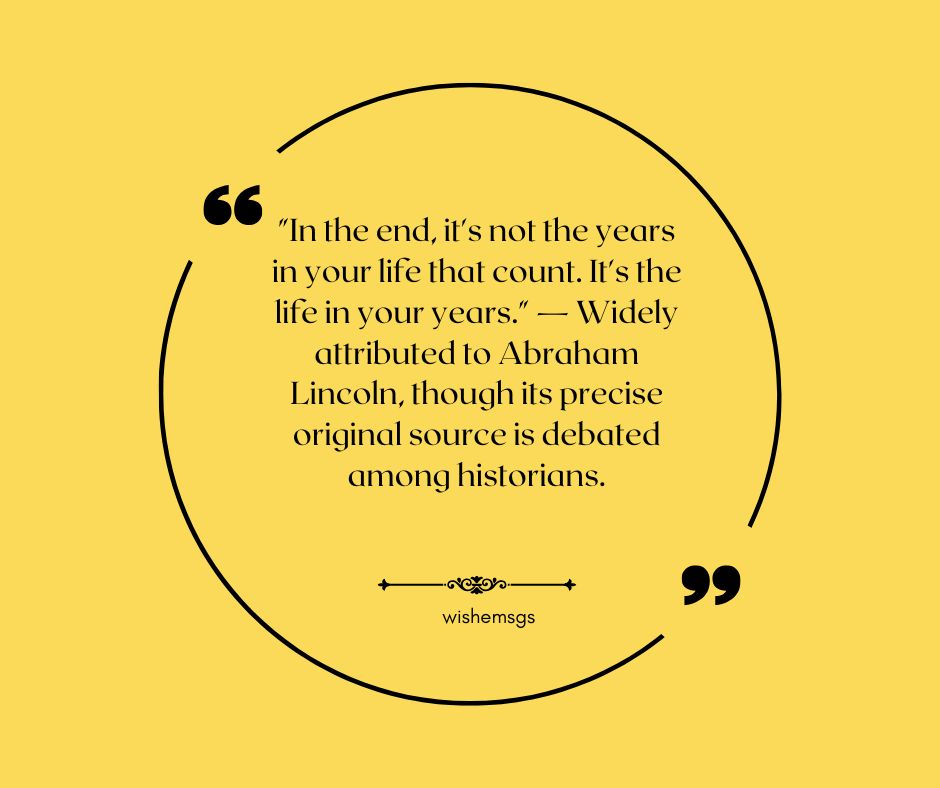
“In the end, it’s not the years in your life that count. It’s the life in your years.” — Widely attributed to Abraham Lincoln, though its precise original source is debated among historians.
“Life is what happens to us while we are making other plans.” — Allen Saunders, cartoonist and writer, Reader’s Digest, 1957. Frequently misattributed to John Lennon, who used a close variant in his 1980 song “Beautiful Boy.”
“The unexamined life is not worth living.” — Socrates, as recorded by Plato in the Apology.
“Life is 10% what happens to you and 90% how you react to it.” — Widely attributed to Charles R. Swindoll, from his writings on attitude.
Quotes About Success
“Success is not final, failure is not fatal: it is the courage to continue that counts.” — Commonly attributed to Winston Churchill; no verified transcript contains this exact wording, so the precise source is unconfirmed.
“I have not failed. I’ve just found 10,000 ways that won’t work.” — Thomas Edison, as recounted in later biographies of his work on the light bulb.
“The only way to do great work is to love what you do.” — Steve Jobs, Stanford University commencement address, 2005.
Related: Quote of the Day: Daily Inspiration to Start Your Morning Right
Quotes About Love
“Where there is love there is life.” — Mahatma Gandhi.
“To love and be loved is to feel the sun from both sides.” — David Viscott, psychiatrist and author, from his writings on emotional health.
“To love oneself is the beginning of a lifelong romance.” — Spoken by the character Mrs. Allonby in Oscar Wilde’s play A Woman of No Importance (1893); commonly attributed to Wilde as the author.
Quotes About Happiness
“Happiness is not something ready made. It comes from your own actions.” — The 14th Dalai Lama.
“For every minute you remain angry, you give up sixty seconds of peace of mind.” — Popularly attributed to Ralph Waldo Emerson; not confirmed in his verified published essays.
Quotes About Leadership
“A leader is best when people barely know he exists.” — Adapted from the Tao Te Ching, attributed to Laozi.
“Management is doing things right; leadership is doing the right things.” — Peter Drucker, from his writings on organizational leadership.
Quotes About Education
“Education is the most powerful weapon which you can use to change the world.” — Nelson Mandela, address at the launch of the Mindset Network, 2003.
“The beautiful thing about learning is that no one can take it away from you.” — Commonly attributed to B.B. King; a verified original source has not been confirmed.
Quotes About Courage
“Courage is not the absence of fear, but the triumph over it.” — Widely attributed to Nelson Mandela, reflecting themes in Long Walk to Freedom, though this exact phrasing doesn’t appear verbatim in the book.
“You gain strength, courage, and confidence by every experience in which you really stop to look fear in the face.” — Eleanor Roosevelt, You Learn by Living, 1960.
Quotes About Kindness
“No act of kindness, no matter how small, is ever wasted.” — Commonly attributed to Aesop; the sentiment reflects morals across several fables, though this compact phrasing is a later condensation, not an exact ancient text.
“Kindness is a language which the deaf can hear and the blind can see.” — Widely attributed to Mark Twain; not confirmed in his verified published works and likely apocryphal per quote researchers.
Quotes About Change
“The only constant in life is change.” — Attributed to Heraclitus, based on his teaching that “everything flows” (panta rhei), though this exact English phrasing is a later paraphrase, not a surviving direct quotation.
“Be the change you wish to see in the world.” — Widely attributed to Mahatma Gandhi; researchers have found no record of him saying this exact sentence. His closer, verified statement is: “If we could change ourselves, the tendencies in the world would also change.”
Quotes About Wisdom
“The only true wisdom is in knowing you know nothing.” — Socrates, as recorded by Plato.
“Turn your wounds into wisdom.” — Oprah Winfrey, widely quoted from her public commencement addresses.
Quotes About Time
“Lost time is never found again.” — Benjamin Franklin, Poor Richard’s Almanack.
Quotes About Dreams
“All our dreams can come true, if we have the courage to pursue them.” — Walt Disney, widely quoted from interviews and company literature, though the original recorded context isn’t fully documented.
“A dream you dream alone is only a dream. A dream you dream together is reality.” — Widely attributed jointly to John Lennon and Yoko Ono, from interviews discussing their shared work.
Quotes About Friendship
“A real friend is one who walks in when the rest of the world walks out.” — Walter Winchell, American journalist, in his newspaper columns.
“Friendship is born at that moment when one person says to another, ‘What! You too? I thought I was the only one.'” — C.S. Lewis, The Four Loves, 1960.
Quotes About Hope
“We must accept finite disappointment, but never lose infinite hope.” — Martin Luther King Jr., “Our God Is Marching On!” speech, Montgomery, Alabama, 1965.
Famous Quotes and Quotations by Historical Figure
Abraham Lincoln (1809–1865)
16th U.S. President, who led the country through the Civil War.
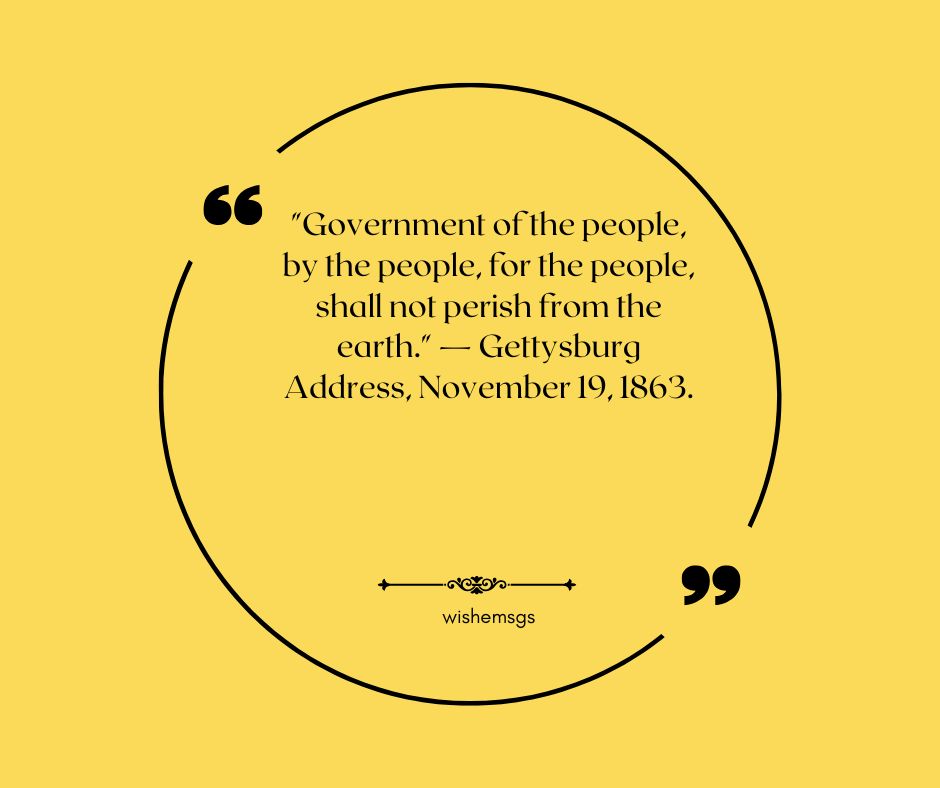
“Government of the people, by the people, for the people, shall not perish from the earth.” — Gettysburg Address, November 19, 1863.
Albert Einstein (1879–1955)
Theoretical physicist best known for the theory of relativity.
“Imagination is more important than knowledge.” — Interview, The Saturday Evening Post, 1929.
The popular line “Insanity is doing the same thing over and over and expecting different results” is very frequently attributed to Einstein, but no verified source in his writings, letters, or recorded interviews confirms he said it — see the misattribution table.
Maya Angelou (1928–2014)
Poet and memoirist, author of I Know Why the Caged Bird Sings.
“I’ve learned that people will forget what you said, people will forget what you did, but people will never forget how you made them feel.” — Most reliably traced to a 2003 interview, rather than her published books.
Confucius (551–479 BCE)
Chinese philosopher whose teachings, compiled in the Analects, shaped East Asian ethics for centuries.
“It does not matter how slowly you go as long as you do not stop.” — Widely attributed to Confucius, though this exact English wording doesn’t appear in verified translations of the Analects; best treated as a paraphrase of his broader teachings.
Aristotle (384–322 BCE)
Greek philosopher and student of Plato, foundational to Western logic, ethics, and science — the same misattribution pattern seen with Einstein and Gandhi above applies to one of his most-quoted lines:
“We are what we repeatedly do. Excellence, then, is not an act, but a habit.” — Actually a paraphrase by writer Will Durant, summarizing Aristotle’s Nicomachean Ethics, in Durant’s 1926 book The Story of Philosophy.
Winston Churchill (1874–1965)
British Prime Minister who led the United Kingdom through the Second World War.
“We shall fight on the beaches.” — Speech to the House of Commons, June 4, 1940.
Ralph Waldo Emerson (1803–1882)
American essayist and leading figure of the Transcendentalist movement.
“Do not go where the path may lead, go instead where there is no path and leave a trail.” — Frequently attributed to Emerson, though this exact sentence hasn’t been located in his verified published essays.
Nelson Mandela (1918–2013)
Anti-apartheid leader and first democratically elected President of South Africa.
“It always seems impossible until it’s done.” — Widely quoted and consistent with his public remarks, though not confirmed in his written autobiography.
Eleanor Roosevelt (1884–1962)
First Lady of the United States, later a UN delegate who helped draft the Universal Declaration of Human Rights.
“No one can make you feel inferior without your consent.” — This Is My Story, 1937.
Mark Twain (1835–1910)
American author of The Adventures of Tom Sawyer and Adventures of Huckleberry Finn.
“The two most important days in your life are the day you are born and the day you find out why.” — Frequently attributed to Twain, but no verified source in his letters, speeches, or books confirms this; quote researchers consider it likely misattributed.
Oscar Wilde (1854–1900)
Irish playwright, poet, and novelist known for his wit.
“Be yourself; everyone else is already taken.” — Widely attributed to Wilde, though no verified source in his published letters or works has been located.
Martin Luther King Jr. (1929–1968)
Baptist minister and civil rights leader.
“Darkness cannot drive out darkness; only light can do that. Hate cannot drive out hate; only love can do that.” — Strength to Love, 1963.
Related: Maya Angelou Quotes
Frequently Misattributed Quotes
| Popular Quote | Commonly Credited To | Actual Origin |
|---|---|---|
| “Let them eat cake.” | Marie Antoinette | Appears in Jean-Jacques Rousseau’s Confessions, written before Marie Antoinette arrived in France. |
| “Elementary, my dear Watson.” | Sherlock Holmes | Never appears in this exact phrasing in any Arthur Conan Doyle story. |
| “I disapprove of what you say, but I will defend to the death your right to say it.” | Voltaire | Written by biographer Evelyn Beatrice Hall as a summary of his views, not a direct quotation. |
| “Insanity is doing the same thing over and over and expecting different results.” | Albert Einstein | No verified source exists in his writings, letters, or interviews. |
| “Be the change you wish to see in the world.” | Mahatma Gandhi | Not found in his verified writings; his closest documented statement differs in wording. |
| “We are what we repeatedly do. Excellence is a habit.” | Aristotle | A 1926 paraphrase by writer Will Durant, summarizing Aristotle’s ethics, not a direct translation. |
Misattribution follows a predictable pattern: a paraphrase gets repeated until it sounds original, or a line from an obscure writer gets reassigned to a more famous name because it’s more shareable.
How to Verify a Quote’s Authenticity
- Look for a primary source. A verified quote should trace to a specific speech, book, letter, or recorded interview — not just “attributed to.”
- Check a dedicated fact-checking resource, such as Quote Investigator, which specializes in tracing quotes to their earliest documented appearance.
- Consult an established print reference, such as Bartlett’s Familiar Quotations or The Oxford Dictionary of Quotations, both of which apply editorial vetting.
- Be suspicious of undated quotes, particularly ones circulating mainly as social media images.
- Notice when a quote sounds “too modern” for its supposed author’s era — a common sign of an invented or altered line.
Why Some Quotes Survive for Generations
Quotations that last decades or centuries tend to do a few things at once: compress a complicated idea into one memorable image, attach themselves to a moment people already care about, and leave room for readers to apply them to their own lives. A line tied only to its narrow original context tends to fade; a line broad enough for each new generation to re-read tends to persist. This is also why quotes get subtly reworded over time — each retelling nudges the phrasing toward whatever is easiest to remember, which is part of why the popular version and the documented original often diverge.
Related: Mitch Hedberg Quotes
How to Use Quotes Well
- In speeches: Use a quote to open or close a section, not to fill space in the middle — audiences remember quotes best at transition points.
- In essays or articles: Quote sparingly and explain why the quote matters to your specific argument, rather than letting it stand alone.
- In presentations: Pair one quote per slide with a strong visual, in large type — not a wall of text.
- On social media: Always credit the verified author and avoid altering the wording, since altered quotes are how misattribution spreads further.
- In greeting cards or personal notes: Choose quotes that fit the specific relationship and moment — specificity reads as more sincere than generic inspiration.
Recommended Quote Resources
| Resource | Best For |
|---|---|
| Bartlett’s Familiar Quotations | The longest-running, most editorially rigorous English-language quote reference (est. 1855). |
| The Oxford Dictionary of Quotations | Scholarly sourcing for historical and literary quotations. |
| Quote Investigator | Tracing the documented origin of commonly circulated quotes. |
| Wikiquote | A useful starting point — cross-check against a primary source before relying on it. |
FAQs
What is the most famous quote of all time?
There’s no single agreed-upon “most famous” quote, since fame varies by culture and era. Lincoln’s Gettysburg Address opening and Shakespeare’s “To be, or not to be” are among the most widely recognized in the English-speaking world.
Why are so many famous quotes misattributed?
Misattribution usually happens when a paraphrase gets repeated until it sounds exact, or when a lesser-known author’s words get reassigned to a more famous name because it feels more shareable and credible.
How can I find the original source of a quote?
Start with a dedicated fact-checking resource like Quote Investigator, or a scholarly reference such as The Oxford Dictionary of Quotations, both of which trace quotes to their earliest documented appearance.
Is it okay to use a quote if the attribution is uncertain?
Yes, if you say so directly — for example, “widely attributed to” — rather than presenting an unverified quote as historical fact. This is both more accurate and more credible to your audience.
Can I use famous quotes in my own writing without permission?
Short quotations used for commentary, education, or illustration are generally acceptable. Reproducing large collections of one copyrighted modern author’s work without permission can raise copyright concerns — when in doubt, quote briefly and cite the source.
Conclusion
The quotations that last aren’t simply well-phrased — they hold up under scrutiny and still mean something a hundred years later. Treating quotes as historical facts worth verifying, rather than interchangeable inspirational text, is what separates a genuinely useful collection from another recycled list. Bookmark this guide before your next speech, essay, or caption — and get the words, and the person, right.