
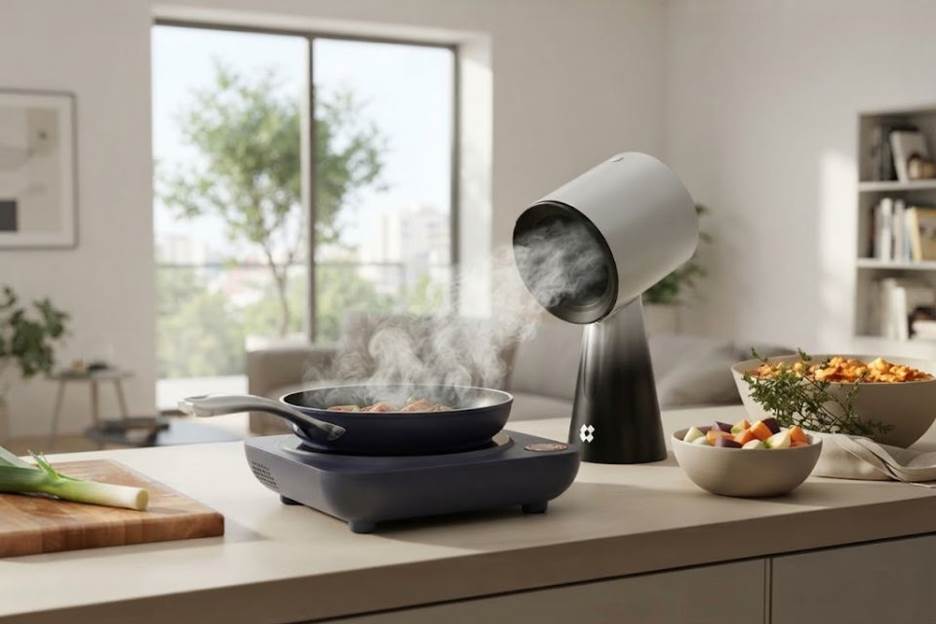
Cooking smoke can become a surprisingly difficult problem in a small apartment. A little smoke from frying or searing can quickly spread beyond the kitchen, especially when there is limited ventilation or an open-plan layout. Greasy particles can settle on nearby surfaces, while strong food odors may linger in curtains, furniture, and fabrics long after the meal is finished.
Installing a traditional range hood is not always practical. Renters may not be allowed to make permanent changes, and some apartment kitchens simply lack the ductwork needed for one. Fortunately, controlling cooking smoke does not depend on a single solution. Better airflow, targeted smoke capture, sensible cooking practices, filtration, and regular cleaning can work together to make a noticeable difference.
Why Cooking Smoke Becomes a Bigger Problem in Small Apartments
The smaller the space, the less room there is for airborne particles and odors to disperse. In a compact kitchen, smoke produced by frying, searing, or overheated oil can reach the living area within moments. An open floor plan can make this even more noticeable because there may be no wall or door separating the cooking area from the rest of the home.
Cooking smoke is also more than the visible haze that appears above a pan. Steam, grease particles, and odors can accompany it, but each behaves somewhat differently. Steam may disappear as it cools, while grease can settle on cabinets and walls. Odors may remain in fabrics even after the visible smoke is gone. Understanding these differences makes it easier to choose the right combination of ventilation, smoke capture, filtration, and cleaning.
Improve Ventilation Before and During Cooking
Good ventilation starts before smoke becomes visible. Opening a suitable window before cooking can give airborne particles a clear path out of the apartment. If another opening is available, creating cross-ventilation may improve the movement of air through the space. The goal is not simply to make the room feel breezy; it is to establish a route that moves contaminated air away from the cooking area and toward an exit.
Fans can support this process, but their direction matters. A fan pointed randomly across the kitchen may spread smoke toward furniture or other rooms instead of helping it escape. When possible, position airflow so that it supports the path toward an open window or other appropriate exhaust point.
A simple approach is to:
- Start ventilation before cooking begins.
- Keep the intended exit path clear.
- Position fans to support outward airflow rather than circulation.
- Continue ventilation briefly after cooking finishes.
Starting early is particularly useful because preventing smoke from accumulating is generally easier than trying to clear a heavily smoky room later.
Use a Portable Range Hood for Targeted Smoke Control
For apartment residents who cannot install a permanent hood, targeted smoke capture can be a practical option. A portable range hood can be positioned close to the cooking area, allowing it to capture or filter some of the airborne material before it spreads throughout the room. Its effectiveness depends heavily on its design, placement, airflow, and filtration system.
Distance matters because smoke rises and disperses quickly. A smoke-capture device positioned near the source generally has a better opportunity to collect airborne particles than one placed several feet away. However, portable equipment should not automatically be considered equivalent to a professionally installed exhaust system. Some models primarily filter air and return it to the room, while others are designed around different ventilation arrangements.
Filters also need regular attention. A clogged or dirty filter can reduce performance and may allow odors and particles to remain in circulation. For renters or anyone facing installation restrictions, portable smoke-control equipment can therefore be one part of a broader strategy rather than a complete replacement for ventilation.
Control Smoke at the Source
One of the most effective ways to manage cooking smoke is to produce less of it in the first place. Excessive heat is a common contributor, particularly when cooking oil begins to overheat. Adjusting the temperature before the oil reaches the point where it visibly smokes can prevent a large amount of airborne residue from entering the room.
The condition of cookware also matters. Burnt food residue, accumulated grease, or an unsuitable pan can create additional smoke when exposed to heat. Keeping pans and cooking surfaces clean makes it easier to control what happens during cooking.
Covered cooking can also help when appropriate for the recipe. A lid can limit the amount of vapor and fine particles escaping directly into the room. The same principle applies to choosing cooking methods that match the food instead of relying on very high heat simply to speed up the process.
The goal is not to eliminate every trace of cooking emissions. Rather, reducing unnecessary smoke at its source gives ventilation and filtration systems less work to do.
Use Fans and Airflow Without Spreading Smoke
A fan does not automatically remove cooking smoke. Its effectiveness depends on where the air is being moved. If it simply pushes contaminated air from the stovetop toward the sofa, curtains, or bedroom, it may solve one problem while creating another.
Think about the direction of the entire airflow path. Ideally, air should move from the cleaner part of the apartment toward the cooking area and then toward an appropriate exit. This is more useful than creating random circulation around the room.
It is also worth considering the fan’s distance from the cooking area. A fan positioned too far away may have little influence over smoke before it disperses. Small adjustments to placement can therefore make a meaningful difference without requiring permanent changes to the apartment.
Can an Air Purifier Help With Cooking Smoke?
An air purifier can be useful as part of a broader strategy, particularly when it is equipped with filtration designed to capture airborne particles. Some models also use activated carbon or similar materials to help reduce certain odors. However, an air purifier should not automatically be treated as a substitute for ventilation or direct smoke capture.
Source control remains important. If a pan is producing heavy smoke, allowing the purifier to process the contaminated air after it has spread throughout the room is generally less direct than capturing or exhausting the smoke near the cooking surface.
Placement also matters. A purifier should have enough surrounding space for air to move through it effectively, and its filters need to be maintained according to the manufacturer’s instructions. For apartments where permanent ventilation is limited, combining source control, appropriate airflow, and filtration can provide a more practical approach than depending on any single device.
Choose Cooking Methods That Produce Less Smoke
Changing the way food is cooked can reduce the amount of smoke an apartment has to deal with. Not every meal needs high-temperature frying or searing. Baking, steaming, simmering, and covered cooking can often produce less visible smoke, depending on the ingredients and preparation method.
Temperature control is especially important. High heat can be useful for certain recipes, but keeping a pan unnecessarily hot can create smoke without improving the final result. Selecting a cooking method that provides the required heat more gradually can make the kitchen easier to ventilate.
Countertop cooking appliances can also give apartment residents more flexibility. For example, an oven-based approach can be useful when a recipe does not need to be prepared directly on a stovetop. A product such as the Ciarra Nosh Oven can fit into this broader strategy by providing another way to prepare certain foods without relying exclusively on high-heat stovetop cooking.
The important point is not that one appliance eliminates cooking emissions. Instead, having multiple cooking options can help residents choose methods that produce less smoke for particular meals.
Reduce Grease and Cooking Odor Buildup After Cooking
Smoke control should continue after the burner is turned off. Greasy particles can settle on stovetops, backsplashes, cabinets, and nearby surfaces, especially after repeated frying. If this residue is left in place, it can contribute to unpleasant odors and make the kitchen feel increasingly difficult to keep clean.
Wiping down frequently affected surfaces after cooking can prevent residue from accumulating. Filters and removable components should also be cleaned or replaced according to their maintenance requirements. If strong odors remain, continuing ventilation for a short period can help clear the remaining airborne contaminants.
Soft materials deserve attention too. Curtains, rugs, upholstery, and other fabrics can absorb cooking odors over time. Regular cleaning of these materials can therefore be part of an overall odor-control routine, particularly in a compact open-plan apartment.
Common Mistakes That Make Apartment Cooking Smoke Worse
Some simple habits can make smoke control much less effective:
- Waiting until visible smoke fills the room before starting ventilation
- Pointing a fan toward the living area instead of an appropriate exit
- Placing smoke-capture equipment too far from the cooking surface
- Ignoring dirty or saturated filters
- Allowing cooking oil to become unnecessarily overheated
- Assuming an air purifier can replace ventilation and source control
These mistakes all have something in common: they address the smoke after it has already spread. A better approach is to control the source, capture airborne material as close to the cooking area as practical, and establish a clear route for air to leave the apartment.
A Simple Smoke-Control Routine for a Small Apartment
A repeatable routine can make smoke management much easier.
Before cooking
- Open an appropriate window or prepare the available ventilation path.
- Check that filters and smoke-control equipment are clean.
- Choose a cooking method and temperature appropriate for the food.
During cooking
- Avoid unnecessarily high heat.
- Keep airflow moving toward an exit.
- Use targeted smoke capture when appropriate.
After cooking
- Continue ventilation briefly.
- Wipe greasy surfaces before residue builds up.
- Clean or maintain filters according to their requirements.
The advantage of this routine is that it combines prevention with removal instead of relying on one device or technique.
Conclusion
Controlling cooking smoke in a small apartment without installing a traditional range hood is mainly about managing the problem at several stages. Better ventilation can move contaminated air toward an exit, while targeted smoke capture can limit how far emissions spread. Careful temperature control and lower-smoke cooking methods reduce what enters the air in the first place, and filtration and cleaning can help manage what remains.
No single solution works equally well in every apartment. The most practical approach is to combine the methods that fit the space, cooking habits, and ventilation options available. For readers exploring flexible countertop cooking and kitchen solutions, Ciarra Appliances offers options worth considering as part of a more adaptable apartment cooking setup.
Top 5 High-Quality FAQs
1. How can I control cooking smoke without a range hood?
Improve airflow, capture smoke near the cooking surface, avoid excessive heat, and use filtration where appropriate. Combining several methods is usually more effective than relying on one solution.
2. Does an air purifier remove cooking smoke?
An air purifier can help capture some airborne particles and reduce certain odors, depending on its filtration system. However, it should complement rather than replace ventilation and source-level smoke control.
3. Can a fan help remove cooking smoke?
Yes, if the fan is positioned to move contaminated air toward an appropriate exit. A poorly positioned fan can instead spread smoke and odors into other parts of the apartment.
4. How can I reduce smoke when frying?
Use an appropriate cooking temperature, avoid overheating oil, keep cookware clean, and use targeted ventilation or smoke capture near the cooking surface. A lid can also help when suitable for the recipe.
5. What is the best way to reduce cooking odors in an apartment?
The most effective approach is to reduce odors at the source, ventilate during and after cooking, clean greasy surfaces, maintain filters, and use suitable filtration when needed.