
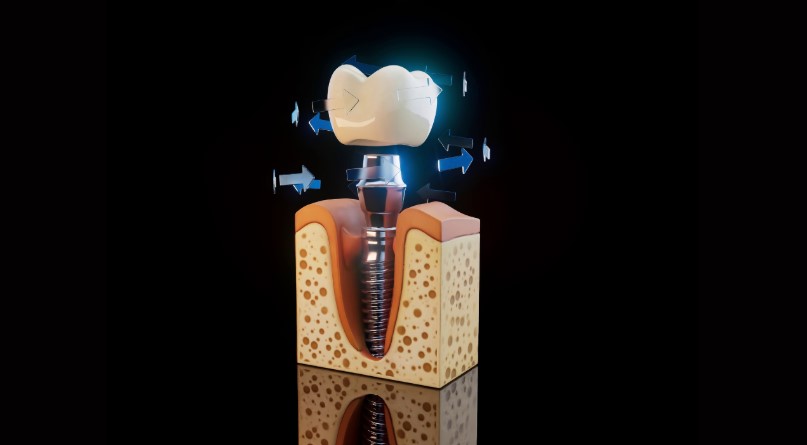
A dental implant is placed into the jawbone, so planning involves much more than choosing a replacement tooth. Before treatment, a dentist needs to understand the condition of the gums, jawbone, nearby teeth, nerves, and other structures in the area.
The amount and shape of available bone can vary from one person to another. Previous tooth loss, gum disease, injury, and other dental conditions may also affect the area where an implant could be placed.
A detailed assessment helps the dentist understand the patient’s oral condition and discuss whether an implant may be suitable. It also provides information needed to plan the position, size, and type of restoration.
Why Bone Assessment Matters Before Dental Implants
Dental implants are placed into the jawbone to support a replacement tooth or another dental restoration. The dentist therefore needs to examine the bone around the planned implant site.
After a tooth is removed, the jawbone in that area can change over time. The amount of change differs between patients.
Checking Bone Volume
Bone volume refers to the amount of bone available in the area being considered for an implant.
The dentist may assess the height and width of the bone. They also consider its shape and position in relation to nearby structures.
For example, a patient who lost a tooth several years ago may have a different amount of bone available compared with someone who lost a tooth recently.
If there is less bone than expected, the dentist can discuss whether additional procedures or alternative treatment options should be considered.
Considering Bone Density
The quality and density of the jawbone may also be relevant to implant planning. Bone differs in structure throughout the mouth and between individuals.
A dentist may use a clinical examination and imaging to assess the area before deciding how treatment should be planned.
Bone assessment is one part of the overall process. The dentist also considers the gums, bite, general oral health, and other factors.
Examining the Gums and Supporting Tissues
The condition of the gums and supporting tissues is an important part of dental implant planning. Before treatment, the dentist examines the gums around the planned implant area and nearby teeth.
They may look for signs such as redness, swelling, bleeding, or other changes.
Checking for Gum Disease
Gum disease can affect the tissues supporting teeth and may need to be addressed before implant treatment is considered.
The dentist may examine the gums and measure areas around the teeth where appropriate. They may also review the patient’s dental history and oral hygiene routine.
If gum problems are identified, the dentist can discuss suitable treatment before moving ahead with implant planning.
This gives the dental team an opportunity to assess the condition of the mouth before making decisions about implant treatment.
Reviewing the Patient’s Dental and Medical History
Dental implant planning also involves discussing the patient’s medical and dental history.
The dentist may ask about previous dental treatment, tooth loss, gum disease, medications, smoking, and other factors that may be relevant to treatment.
Why Medical History Matters
Some medical conditions and medicines can affect dental treatment or healing. This does not necessarily mean a person cannot have an implant, but it may affect how the dentist plans care.
Patients should provide accurate information about their health and medicines. If another healthcare professional is involved in their care, the dentist may need to consider information from that professional where appropriate.
The dentist can then explain any factors that may need additional attention before treatment.
Using Dental X-Rays for Implant Planning
Dental X-rays can provide information about the teeth and jaw structures. Depending on the case, the dentist may use different types of dental imaging.
A standard dental X-ray can show certain aspects of the jaw and teeth, while other imaging methods can provide more detailed information.
What X-Rays Can Show
Imaging may help the dentist assess:
- The available bone
- Nearby teeth and roots
- The general shape of the jaw
- The position of certain anatomical structures
- Areas that may require further assessment
The type of imaging used depends on the patient’s clinical situation and the information required for treatment planning.
How 3D Scans Can Help
Three-dimensional imaging, such as cone beam computed tomography (CBCT), can provide detailed information about the jaw and surrounding structures.
A CBCT scan creates three-dimensional images that can be viewed from different angles.
Looking at the Jaw in Three Dimensions
A 3D scan can help the dentist assess the planned implant area and its relationship with nearby anatomical structures.
This may be useful when the available bone is limited or when important structures are located close to the planned implant site.
CBCT is not automatically required for every patient. The dentist decides whether it is appropriate based on the clinical situation and the information needed for planning.
Checking the Location of Nerves
Some nerves run through or close to areas where dental implants may be considered. The dentist needs to identify relevant anatomical structures before planning implant placement.
Why Nerve Location Matters
The lower jaw contains an important nerve that supplies sensation to parts of the lower lip and chin. Its location can vary between patients.
Imaging may help the dentist understand the relationship between the planned implant area and nearby nerves.
This information can be considered when determining whether implant placement is appropriate and where it may be positioned.
Assessing the Upper Jaw and Sinuses
The upper jaw has different anatomical features from the lower jaw. In some areas, the maxillary sinus is located above the back teeth.
After tooth loss, the amount of bone between the mouth and sinus may change.
Checking the Sinus Area
When an implant is being considered in the upper back jaw, the dentist may assess the available bone and the position of the sinus.
If there is limited bone in this area, the dentist may discuss additional procedures or other treatment options where appropriate.
The decision depends on the patient’s anatomy, oral health, and overall treatment plan.
Examining Nearby Teeth
Implant planning also involves looking at the teeth next to the missing tooth.
The dentist may check these teeth for decay, cracks, gum disease, existing restorations, or other concerns.
Why Nearby Teeth Matter
The condition and position of neighbouring teeth can affect the space available for an implant and replacement tooth.
For example, if nearby teeth have moved into the missing space, the dentist may need to consider the available room when planning treatment.
Treating relevant dental problems may be recommended before implant placement.
Assessing the Bite
The way the upper and lower teeth meet is known as the bite or occlusion. Dentists consider the bite when planning a dental implant and replacement tooth.
Checking Chewing Forces
The dentist may assess how the teeth contact each other when the patient bites and moves the jaw.
They may also look for signs of tooth grinding or clenching.
These factors can be considered when selecting the type and position of the planned restoration.
Planning the Position of the Implant
The position of an implant is an important part of treatment planning. The dentist considers the available bone, nearby structures, bite, and position of the future replacement tooth.
The implant position is planned based on the patient’s anatomy and treatment requirements.
Considering the Final Replacement Tooth
The dentist needs to think about the final crown or other restoration as well as the implant itself.
The replacement tooth is planned in relation to the surrounding teeth, gums, and bite.
This means implant planning generally involves looking at the whole area rather than focusing only on the implant site.
When Bone Grafting May Be Discussed
Some patients may have less bone available than is needed for their proposed treatment. In such cases, the dentist may discuss bone grafting or another procedure.
Bone grafting involves adding material to an area where additional bone volume may be needed.
Is Bone Grafting Needed for Everyone?
No. The need for bone grafting depends on the amount and condition of the available bone and the planned treatment.
Some patients may have enough bone for their proposed implant without additional procedures, while others may require further assessment.
The dentist can explain whether bone grafting is relevant to the patient’s individual situation.
Planning for Dental Implant Treatment in Delhi
Patients researching implant treatment in Delhi may find that the planning process starts with a detailed dental examination rather than the implant procedure itself.
A dentist can assess the teeth, gums, bone, bite, and relevant anatomical structures before discussing suitable options.
Patients considering dental implants in delhi should ask about the recommended imaging, treatment stages, possible risks, alternatives, and expected follow-up before making a decision.
What Patients Can Expect During the Assessment
An implant consultation may involve several steps. The dentist may begin by discussing the patient’s dental history and reasons for replacing the missing tooth.
A clinical examination can then be carried out, followed by imaging if required.
The dentist may assess:
- Jawbone volume
- Bone structure
- Gum health
- Nearby teeth
- Nerves
- Sinuses
- Bite
- Available space
- General oral health
The exact process varies according to the patient’s circumstances.
Questions to Ask Before Implant Treatment
Patients can ask their dentist:
- Is there enough bone for the planned implant?
- What type of imaging will I need?
- Are my gums healthy?
- Are the nearby teeth suitable?
- Is the implant close to a nerve or sinus?
- Will I need any additional procedures?
- What treatment alternatives are available?
- What are the possible risks and limitations?
- How many stages may be involved?
- What follow-up care will I need?
These questions can help patients understand the proposed treatment before making a decision.
Why Individual Planning Matters
Every patient’s jaw and oral structures are different. The amount of bone, position of nerves, sinus location, gum condition, tooth position, and bite can vary.
For this reason, implant treatment should be planned after an appropriate clinical assessment rather than based on a general treatment approach.
A patient considering implant treatment can discuss their dental history, imaging, treatment options, and individual circumstances with a qualified dental professional. Information about dental implants in delhi should be considered alongside an individual clinical examination.
Conclusion
Dental implant planning involves much more than examining the missing tooth. Dentists assess the jawbone, gums, nearby teeth, bite, nerves, sinuses, and other oral structures before deciding how treatment may be approached.
Dental X-rays and, where clinically appropriate, 3D imaging can provide useful information about the anatomy of the planned implant area. The dentist uses this information alongside the clinical examination and medical history to discuss suitable treatment options.
The amount of bone available does not determine treatment on its own. Each case needs individual assessment, and additional procedures or alternative options may be discussed where appropriate.
If you are considering a dental implant, ask your dentist to explain the findings from your examination, the available treatment options, possible risks, and the steps involved before proceeding.