
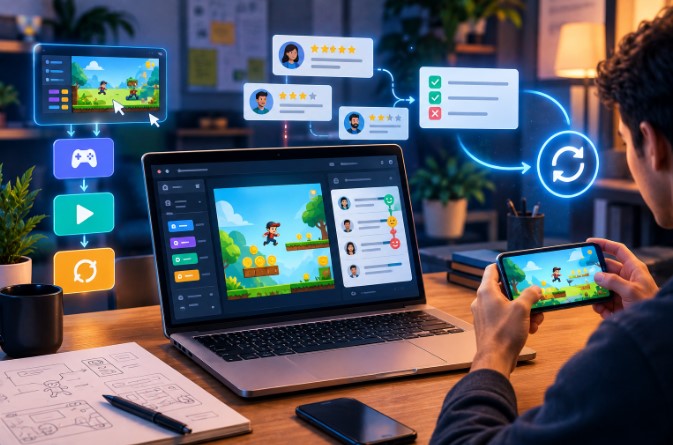
Game testing used to be something that happened late in development, if it happened at all before launch. A developer would build in isolation, assume the game worked as intended, and only discover problems once players started encountering them. No-code game makers have flipped that entirely by making testing not just possible but practically automatic throughout the entire development process. Testing is no longer a final checkpoint, it’s the primary feedback loop that shapes what a game becomes.
Why Testing Is Actually Critical to Game Quality
Testing Reveals What Designers Can’t See Alone
After spending weeks inside a design, creators become blind to certain problems. What feels natural to the person who built it feels confusing to someone experiencing it fresh. That gap between internal expectation and external experience is the entire value of testing, and it can’t be closed without real people playing the game.
Playtesting Catches Problems Before They Become Expensive
A balance issue discovered during prototyping costs nothing to fix. The same issue discovered after weeks of building around it requires reworking significant portions of the game. Early testing prevents the expensive mistake of committing to a flawed foundation.
Players Reveal What Games Are Actually About
Designers think they understand their own creation. Players show what actually matters through their behavior and reactions. Sometimes a supposed core mechanic doesn’t hold player attention while an incidental feature becomes the engaging part. Only testing reveals these truths.
Iteration Based on Real Feedback Produces Better Games
Games refined through genuine playtesting consistently outperform those designed purely through designer intuition. The gap isn’t small, it’s enormous. The difference between a game that feels polished and one that feels rough often comes down to whether serious testing happened.
How No-Code Platforms Make Testing Dramatically Easier
Generating Playable Versions in Minutes, Not Weeks
The single biggest change no-code tools enable is the ability to test an idea almost immediately after conceiving it. What used to require weeks of implementation now takes minutes. That compression means testing can happen constantly throughout development, not just at milestone checkpoints.
Sharing Rough Versions Becomes Trivial
Most no-code platforms generate a shareable link to a playable version instantly. Getting outside feedback no longer requires building something finished or going through complex export procedures. A creator can share a rough prototype and get reactions within minutes.
Testing Doesn’t Require Separate Build or Export Steps
When testing used to require exporting a build, uploading it somewhere, waiting for it to be available, playtesting was rare and formal. Now, testing is built into the workflow, you generate, you play, you adjust, you test again. That workflow integration makes frequent testing the path of least resistance.
Iteration Happens at Speed
Playtesting reveals a problem. You adjust one element, generate a new version, and test the change. That entire loop can happen in minutes instead of hours or days. The speed enables testing-driven refinement as the default approach rather than something special.
Tracking Changes Becomes Automatic
Many no-code platforms keep version history, letting creators compare old versions with new ones, revert changes if needed, or understand exactly what changed between iterations. That transparency supports learning from playtesting.
Types of Testing No-Code Tools Support
Core Mechanic Validation
Does the core action feel satisfying? Is it immediately understandable? Does it remain engaging after repetition? Testing a bare-minimum version focused purely on core mechanics reveals whether the underlying concept is sound before any surrounding systems get added.
Balance Testing
Is difficulty fair and achievable? Do all mechanics feel appropriately powerful or do some dominate too much? Does progression escalate at the right pace? Balance issues are almost impossible to identify without real playtesting, and they’re critical for whether a game feels good.
Clarity and Onboarding Testing
Do new players understand what to do without explanation? Does the interface communicate clearly? Are tutorial elements effective? Testing with actual newcomers reveals confusion that the creator can’t see after weeks of familiarity.
Pacing and Duration Testing
Do game sessions feel like the right length? Does difficulty escalate at the right pace? Does engagement hold throughout or does it drop partway through? Playtesting reveals pacing problems that internal estimates miss consistently.
Social and Multiplayer Testing
Do competitive or cooperative features actually create the intended dynamic? Do shared experiences feel meaningful or disconnected? Does the social layer enhance or distract from core gameplay? Multiplayer testing requires real players interacting, not solo testing.
Aesthetic and Feedback Testing
Do visual and audio assets communicate the game’s intent? Does feedback feel immediate and satisfying or delayed and disconnected? Does the overall aesthetic match the intended tone? Testing reveals whether choices made in isolation land the way the creator intended.
Games like The Journey Begins demonstrate what emerges from thorough testing and iteration, a polished, coherent experience where mechanics and presentation work together, exactly the kind of integration that typically comes from real playtesting rather than isolated design.
How to Actually Run Effective Playtests
Test With People Who Aren’t You
The most common mistake is testing only with people already invested in the project or with the creator themselves. Actual feedback comes from people experiencing the game with fresh eyes and no baggage about design intent.
Watch What Players Do, Don’t Just Ask Questions
How players actually behave reveals more than what they’ll say in response to questions. Where do they hesitate? What do they try that wasn’t intended? Where do they lose interest? Observation catches things verbal feedback never would.
Play Silently While They Test
Resist the urge to explain or guide. If a player is confused, let them be confused. That confusion is data. The instinct to help them get “unstuck” masks the real problem that the game isn’t clear enough.
Ask Open Questions, Not Leading Ones
“Did you like it?” gets yes or no answers. “What was confusing?” “What was your favorite part?” “What would you change?” generate actual feedback. Framing matters enormously for getting useful information.
Test Early and Often, Not Just When Things Feel Finished
Testing a rough, barely functional version often produces more useful feedback than testing something polished. Early feedback shapes the direction of development. Late feedback just confirms what’s already built.
Share Multiple Versions to Compare
Generate two approaches to the same problem and have testers play both. Direct comparison reveals which version actually feels better, information that can’t come from testing each version in isolation.
Common Testing Mistakes No-Code Tools Make Easier to Avoid
Skipping Testing Entirely Because Generation Is Fast
Just because building is fast doesn’t mean testing is optional. The speed advantage comes from being able to iterate based on testing, not from skipping it entirely.
Testing Only With a Single Person
One person’s reactions aren’t data, they’re anecdotes. Testing with a handful of different players reveals patterns that a single tester never would.
Making Changes Without Testing to Confirm Improvement
Changing something feels like progress. Testing before and after confirms that the change actually improved things. Many adjustments that feel like improvements are actually neutral or make things worse.
Ignoring Negative Feedback Because You Disagree
Playtester says something is confusing but you’re certain it’s clear? That’s data, not a personal attack. If even one tester was confused, others will be too. Dismissing feedback because you disagree with it wastes testing’s actual value.
Testing Only Core Mechanics, Ignoring Presentation
A mechanically sound game can still fail if the presentation is confusing or unappealing. Testing needs to cover the complete experience, not just isolated mechanics.
Building Testing Into Your Development Workflow
Make Sharing the Default, Not the Exception
Every version you’re happy with should be shareable. That default approach to sharing creates constant access to feedback rather than testing being a special event.
Keep a Testing Log
Document what each playtester said, what surprised you, what you changed as a result. That log becomes invaluable for understanding how testing actually shaped the final game.
Version Your Testing
Keep track of which version was tested when, what feedback came from each test, and what changed as a result. That history shows the connection between testing and improvement.
Test Across Devices and Conditions
The game might play perfectly on your computer but have issues on mobile, in browser, with different input methods, or with poor internet. Testing across the actual conditions players will use catches problems that isolated testing never would.
Build Community Feedback Into Ongoing Development
Testing doesn’t end at launch. Live games benefit from continuous playtesting and iteration based on real player behavior. Create a game and keep testing as development continues.
How No-Code Testing Supports Different Development Stages
Prototyping Stage: Validate Core Concept
Early testing confirms whether the basic idea is sound. This is where rough, quick testing matters most, because you’re still deciding if the direction is right.
Development Stage: Refine and Balance
Mid-development testing focuses on whether specific adjustments improve the experience, whether balance is fair, whether pacing works. This is where A/B testing different versions matters.
Polish Stage: Confirm the Experience
Late-stage testing verifies that polish actually improved things, that edge cases are handled well, that the overall experience is coherent. This is where catching small problems before launch becomes critical.
Post-Launch: Support Ongoing Iteration
Live games benefit from continuous testing and adjustment based on player behavior. No-code platforms make updating and retesting quick enough that live iteration becomes practical.
Making Testing Psychological Safe
Frame Testing as Information Gathering, Not Judgment
Playtester feedback isn’t criticism of you personally, it’s data about how players experience your work. That framing makes it far easier to receive honest feedback without defensiveness.
Separate Your Ego From Your Game
The game you built isn’t an extension of you. Feedback about the game isn’t feedback about your worth as a person. That separation is essential for actually learning from testing.
Treat Testers as Collaborators, Not Critics
Players who give honest feedback are helping you build something better. That mindset creates space for genuine, candid responses rather than people trying to be nice.
Final Thoughts
No-code game makers support testing by removing the friction that used to make playtesting rare and formal. Testing becomes something that happens constantly throughout development, not just at checkpoints, because the workflow supports it. That shift from testing-as-checkpoint to testing-as-process is what enables genuinely good game design.
The games benefiting most from no-code testing support aren’t the ones getting tested more, they’re the ones genuinely listening to what testing reveals and iterating based on actual player experience. Testing is only valuable if the insights actually shape what gets built. Create the space for testing, genuinely engage with the feedback, and iterate based on what players show you. That disciplined approach, enabled by no-code tools that make testing practical, is what separates games that feel polished from ones that feel rough.